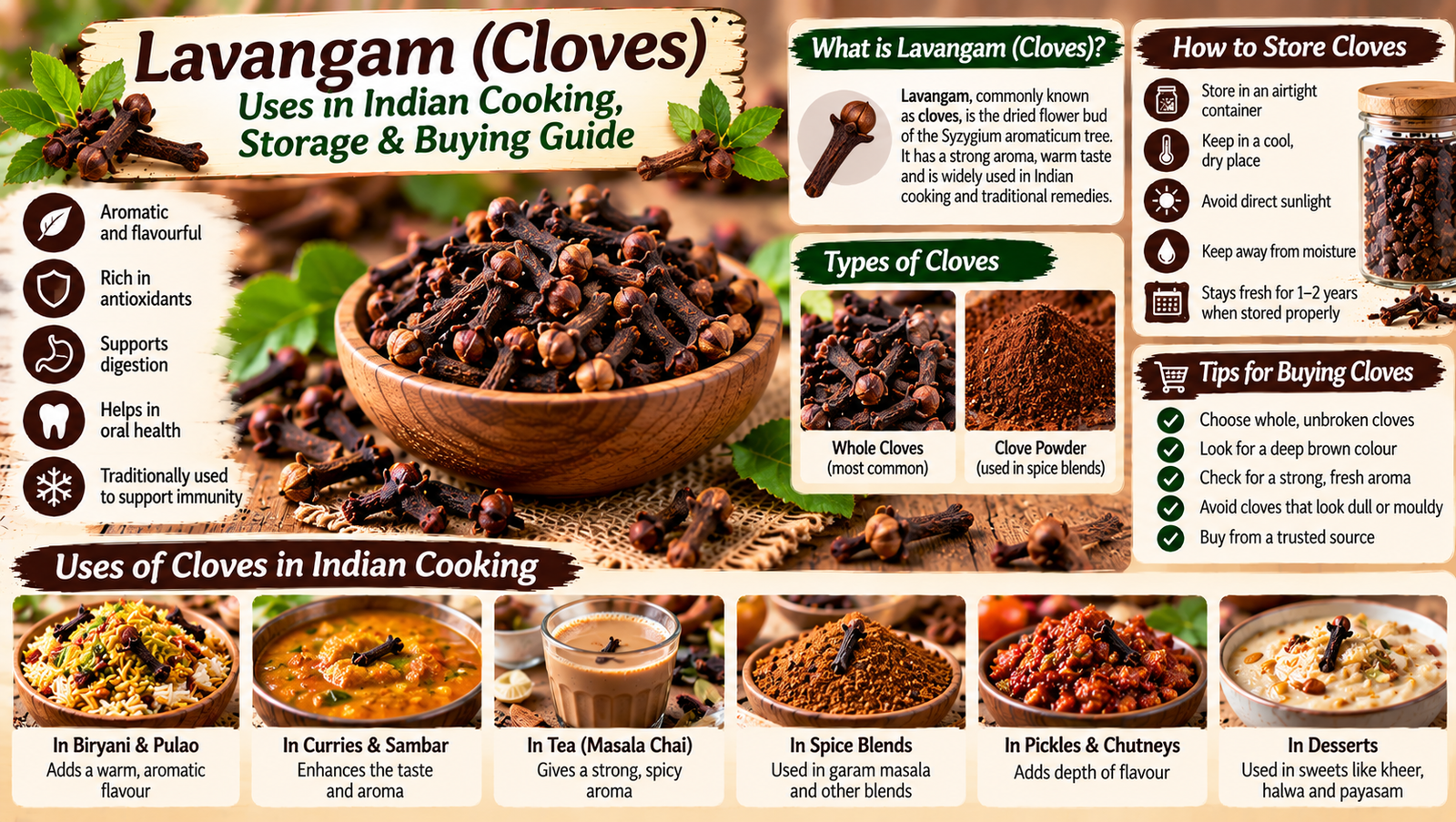
Lavangam is the Tamil name for cloves, the dried unopened flower buds of the clove tree. In Indian kitchens lavangam is a warm, sweet, intensely aromatic whole spice used in biryani, garam masala, rasam, chai and pickles. It is called laung in Hindi, grambu in Malayalam and lavanga in Kannada and Telugu.
If you have ever bitten into a small dark nail-shaped bud hiding in your biryani, you have met lavangam. It is one of the loudest spices in the Indian masala dabba, and a little goes a very long way. This guide covers what lavangam is, how it tastes, how Indian cooks use it, how to store it, and when whole cloves make sense versus clove powder.
What is lavangam? Names across India
Lavangam, laung and cloves are the same spice. The name simply changes with the language, which is why the same jar is labelled differently in a Chennai shop and a Delhi shop.
- Tamil: lavangam (also written lavanga pattai for cinnamon, so do not confuse the two)
- Hindi: laung
- Malayalam: grambu
- Kannada and Telugu: lavanga, lavangalu
- Marathi and Gujarati: lavang
- Bengali: lobongo
- English: clove
In India, cloves are grown mainly in the Western Ghats belt, across parts of Kerala, Tamil Nadu and Karnataka, along with the Nilgiris and the Andaman and Nicobar Islands. Kerala and Tamil Nadu plantation cloves are what most South Indian households buy.
What does lavangam taste and smell like?
Lavangam is sharp, warm and faintly sweet, with a numbing, almost peppery edge on the tongue. The aroma is the easiest way to judge quality: a good clove smells strongly even before you crush it.
That strength is why cloves are measured in single buds rather than spoons. Two or three cloves are enough for a pot of pulao for four people. Add ten and the dish will taste only of cloves, so restraint matters more with lavangam than with almost any other spice.
A fresh clove is also slightly oily. Press a bud with your fingernail and you should see a faint shine. Buds that are pale, brittle and snap into dust with no smell have lost most of their aroma and will do very little for your cooking.
How lavangam is used in Indian cooking
Cloves have long been part of South Indian and North Indian cooking alike, and the way they are used changes from region to region.
Biryani, pulao and rice dishes
This is the most familiar use. Whole cloves go into hot ghee or oil at the start, along with bay leaf, cardamom, cinnamon and star anise, so the fat picks up the aroma before the rice and masala go in. Most cooks leave the whole buds in the pot and simply eat around them.
Garam masala and sambar powder
Lavangam is a backbone spice in garam masala. It is dry roasted lightly with coriander seed, cumin, cinnamon, black pepper and cardamom, then ground. Several Tamil and Kerala sambar and rasam powder recipes include a few cloves for depth, though the quantity stays small.
Rasam, kuzhambu and gravies
In rasam and in Chettinad-style gravies, cloves usually arrive through the masala paste or spice powder rather than as whole buds, because nobody wants a whole clove in a thin rasam. This is exactly where ground lavangam powder is easier to work with than whole buds.
Chai and kashayam
Masala chai almost always has a clove or two, crushed with cardamom and ginger before the water goes on the boil. South Indian households also add cloves to simple home-made kashayam and panakam style drinks, a habit that has been part of Indian kitchens for generations.
Pickles, chutneys and preserves
Cloves appear in many Indian pickle masalas, in Gujarati and Punjabi sweet pickles, and in festive sweets like gajar halwa and payasam in very small quantities. They also go into biryani-shop style raita masalas and into some north Indian meat marinades.
Whole cloves or clove powder? Which to buy
Both have a place, and most Indian kitchens keep both.
Whole cloves keep their aroma far longer because the oils stay sealed inside the bud. Use them when the spice is tempered in oil or ghee, or when you want the aroma without a visible speck of powder in the dish. Whole is the right choice for biryani, pulao, chai and pickles.
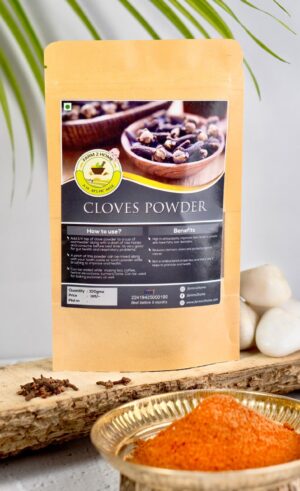
Clove powder is faster, mixes evenly and disappears into the food. It is the practical choice for masala blends you grind at home, for rasam and gravy powders, for marinades, for baking, and for anything where you want flavour spread through the whole dish. Our cloves powder (lavangam powder) in a 100g pack is priced at ₹194.25 and is in stock, with delivery across India.
One practical caution with powder: because it is already ground, it is much stronger per spoon than you expect. Start with a pinch, taste, then adjust. A quarter teaspoon of clove powder can carry a kadai of gravy.
How to store lavangam so it stays aromatic
Cloves lose aroma to air, heat and light, which is the whole story of spice storage in an Indian kitchen.
- Keep them in a tightly closed glass or steel container, not an open masala tin left near the stove
- Store away from the gas burner and away from direct sunlight, since heat drives off the aromatic oils
- Use a dry spoon every time, especially during the monsoon, as moisture is what causes clumping and mustiness in ground spices
- Buy in smaller packs you will finish in a few months rather than a large bag that sits open for a year
- Whole cloves hold up longer than ground, so if you buy both, finish the powder first
A simple test before you cook: rub a pinch of powder between your palms and smell it. If the aroma is faint, increase the quantity slightly, or switch to a fresh pack.
Buying lavangam online in India
When buying cloves or clove powder online, check three things: the pack size, the packing date, and whether anything has been added. Clove powder should be only cloves, with no filler, no added colour and no mixed-in starch.
Farm2Home sells natural and traditional Indian food products and delivers across India. If you cook South Indian food regularly and grind your own podis and sambar powders, keeping a pack of lavangam powder at ₹194.25 for 100g alongside your whole cloves saves a lot of time at the mixie.
Lavangam FAQ
What is lavangam in English?
Lavangam in English is clove. It is the dried unopened flower bud of the clove tree, sold as whole buds or as ground clove powder, and used as a warm aromatic spice in Indian cooking.
Is lavangam the same as laung?
Yes. Lavangam is the Tamil word and laung is the Hindi word for the same spice, cloves. Malayalam calls it grambu, Kannada and Telugu call it lavanga, and Marathi and Gujarati call it lavang.
How many cloves should I add to biryani?
For a biryani or pulao serving four people, two to four whole cloves are enough. Cloves are very strong, so adding more will make the clove flavour dominate the rice and masala instead of blending with them.
Can I use clove powder instead of whole cloves?
Yes, but use much less. As a rough guide, a small pinch of clove powder stands in for one whole clove. Add the powder along with the other ground masalas rather than into hot oil, where it can scorch quickly.
How do I know if my cloves are still good?
Smell them. Fresh cloves give off a strong aroma straight from the jar and feel slightly oily when pressed. Pale, dry, dusty buds with little smell have lost their aromatic oils and will add very little flavour.
What is the price of lavangam powder on Farm2Home?
Farm2Home sells a 100g pack of cloves powder, or lavangam powder, at ₹194.25. It is currently in stock and is delivered across India.
Is lavangam used in sweets?
Yes, in small quantities. Cloves go into some Indian sweets and festive preparations such as carrot halwa and certain payasams, and into sweet pickles, where a single clove adds warmth without taking over the dish.