
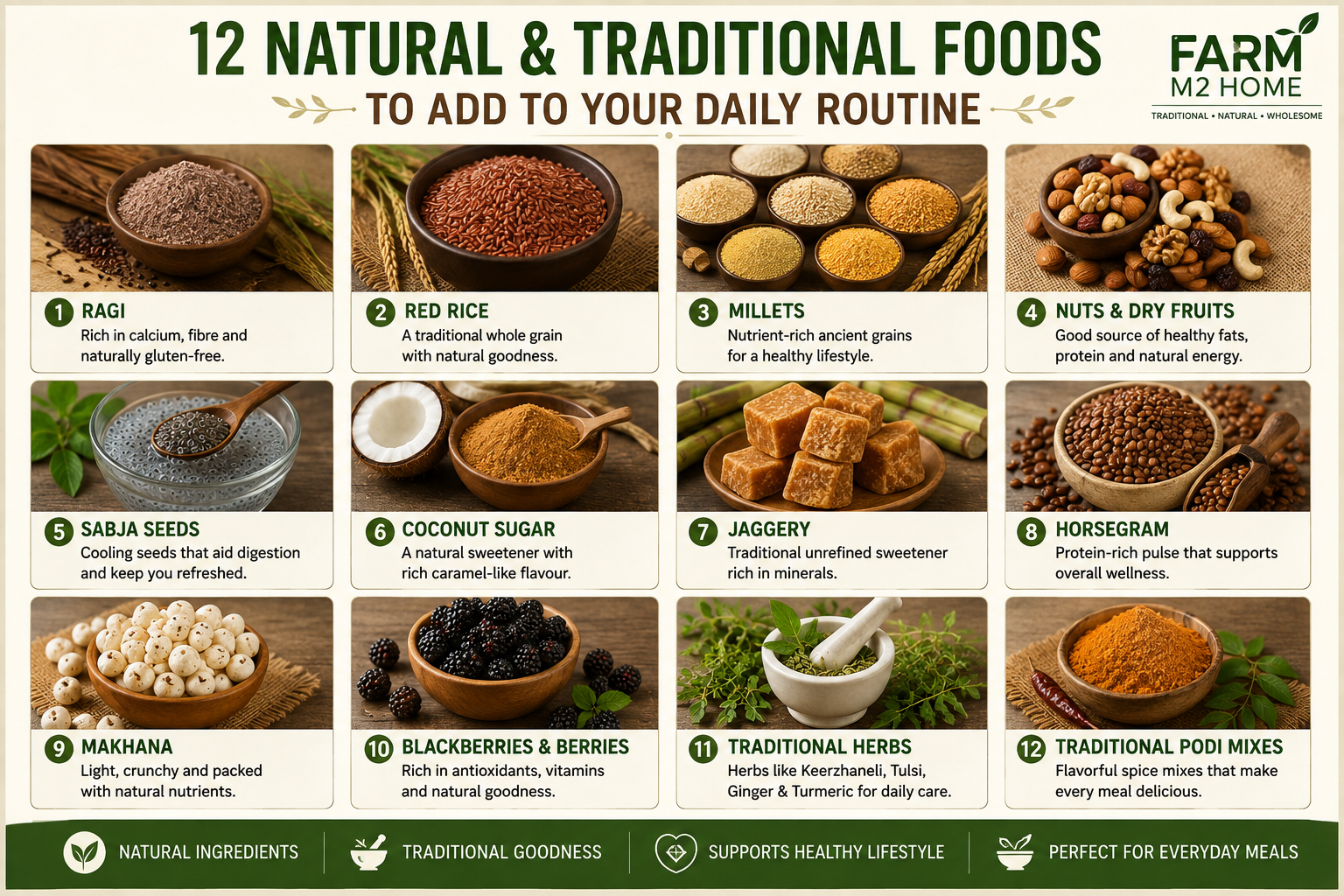
Traditional foods have always been an important part of Indian cooking. Long before modern packaged foods became common, families relied on grains, pulses, spices, seeds, fruits, herbs, and naturally prepared ingredients to create everyday meals.
Today, many people are rediscovering these familiar ingredients because they can bring variety, flavour, and traditional goodness to modern routines. Natural traditional foods can be included in breakfast, lunch, snacks, beverages, and homemade desserts without making everyday cooking complicated.
Farm M2 Home brings a range of traditional food ingredients together, helping families explore familiar Indian flavours in convenient ways.
Here are 12 natural and traditional foods that you can consider adding to your daily food routine.
1. Ragi
Ragi, also known as finger millet, is a traditional grain widely used in South Indian cooking.
It can be prepared in several ways, including:
- Ragi porridge
- Ragi dosa
- Ragi idli
- Ragi roti
- Ragi malt
Ragi is naturally a source of carbohydrates, dietary fibre, and minerals such as calcium.
A warm bowl of ragi porridge can be a simple breakfast option, while ragi dosa can be served with chutney or sambar.
2. Red Rice
Red rice is a traditional rice variety known for its naturally reddish outer layer.
Depending on the variety and processing method, red rice can provide more fibre and plant compounds than highly polished white rice.
It can be used for:
- Everyday rice meals
- Porridge
- Puttu
- Idiyappam
- Rice-based traditional recipes
Replacing some refined grains with less-refined traditional grains can add variety to your meals.
3. Millets
Millets are a group of small-seeded grains that have been part of traditional Indian diets for generations.
Common varieties include:
- Foxtail millet
- Little millet
- Pearl millet
- Kodo millet
- Barnyard millet
- Finger millet
Millets can be prepared as dosa, idli, porridge, upma, rice-style dishes, and other recipes.
They are versatile and can be particularly useful for people looking to diversify their grain choices.
4. Nuts and Dry Fruits
Nuts and dry fruits are another simple addition to a traditional food routine.
Almonds, walnuts, dates, raisins, and other dry fruits can be eaten as snacks or added to recipes.
They can be included in:
- Porridge
- Milk
- Smoothies
- Breakfast bowls
- Homemade sweets
- Desserts
Nuts provide healthy fats, protein, fibre, vitamins, and minerals, although portion size is important because they are energy-dense.
5. Sabja Seeds
Sabja seeds, also known as basil seeds, are traditionally used in Indian beverages and desserts.
When soaked in water, they develop a soft, jelly-like coating.
You can add soaked sabja seeds to:
- Lemon drinks
- Fruit beverages
- Milk drinks
- Falooda
- Smoothies
- Puddings
Always soak sabja seeds before consuming them and follow the product preparation instructions.
6. Coconut Sugar
Coconut sugar is made from the sap of coconut palm flower buds.
It has a brown colour and a mild caramel-like flavour.
It can be used in:
- Tea
- Coffee
- Porridge
- Pancakes
- Homemade desserts
- Selected baking recipes
Although coconut sugar is often described as a natural sweetener, it is still an added sugar. Therefore, it should be consumed in moderation.
7. Jaggery
Jaggery is one of India’s best-known traditional sweeteners.
It is commonly made from sugarcane juice or palm sap and can be found in blocks, pieces, or powdered forms.
Jaggery is traditionally used in dishes such as:
- Sweet pongal
- Payasam
- Laddoos
- Traditional drinks
- Homemade snacks
It provides a deeper flavour than refined white sugar.
However, jaggery is still a source of added sugar and should be used appropriately.
8. Horsegram
Horsegram, commonly known as kollu, is a traditional pulse used in South Indian cuisine.
It can be prepared as:
- Kollu rasam
- Kollu sundal
- Kollu soup
- Kollu podi
- Horsegram rice mixes
Horsegram is a source of plant protein, dietary fibre, and other nutrients.
Adding different pulses to your diet can help increase variety in plant-based foods.
9. Makhana
Makhana, also called fox nuts or lotus seeds, has become increasingly popular as a snack.
They can be roasted and seasoned for a simple crunchy snack.
Makhana can also be added to selected desserts and traditional recipes.
For a quick snack, lightly roasted makhana can be combined with suitable spices.
When purchasing flavoured or packaged varieties, check the ingredient and nutrition labels.
10. Blackberries and Other Berries
Berries such as blackberries provide colour, flavour, fibre, vitamin C, and naturally occurring plant compounds.
Blackberries can be added to:
- Smoothies
- Yogurt
- Oatmeal
- Fruit salads
- Breakfast bowls
- Homemade desserts
Fresh or frozen unsweetened berries can both be useful depending on availability.
Including different coloured fruits in your diet is a simple way to increase variety.
11. Traditional Herbal Ingredients
India has a long history of using herbs in traditional food and wellness practices.
Ingredients such as Keezhanelli, tulsi, ginger, turmeric, and other herbs may be used in traditional preparations.
However, herbal ingredients should be used responsibly.
Traditional use does not necessarily mean an herb has been scientifically proven to treat a disease.
If you have a medical condition or take medicines, speak with a healthcare professional before using concentrated herbal preparations.
12. Traditional Podi and Spice Mixes
Podi is an important part of South Indian food culture.
Traditional podis can be made using roasted pulses, seeds, spices, and herbs.
Examples include:
- Paruppu podi
- Kollu podi
- Idli podi
- Curry leaf podi
- Sesame podi
A small quantity can add flavour to rice, idli, dosa, or other meals.
Because podis may contain salt and spices, use an appropriate amount according to your dietary needs.
How to Add Traditional Foods to Your Routine
You don’t need to completely change your diet to include traditional foods.
Small changes can make everyday meals more interesting.
Start With Breakfast
Try ragi porridge, millet dosa, red rice idiyappam, or oats with nuts and dry fruits.
Add Traditional Ingredients to Drinks
Sabja seeds, coconut sugar, fruits, and nuts can be used in suitable homemade beverages.
Choose Traditional Snacks
Roasted makhana, nuts, dry fruits, or other suitable traditional snacks can replace some highly processed snack choices.
Add Variety to Lunch
Use different grains and pulses such as red rice, millets, and horsegram.
Experiment With Homemade Desserts
Jaggery, coconut sugar, fruits, nuts, and traditional ingredients can be incorporated into selected homemade desserts.
Why Choose Natural Traditional Foods?
One of the biggest advantages of traditional foods is their versatility.
Many traditional ingredients are minimally processed or used close to their original form. They also provide an opportunity to explore regional food traditions.
However, natural does not automatically mean healthy in unlimited quantities.
For example, jaggery and coconut sugar are traditional sweeteners but still contain sugar. Nuts are nutritious but calorie-dense. Packaged traditional snacks may contain added salt or oil.
Therefore, the overall diet and portion size matter.
Simple Tips for a Balanced Routine
To make traditional foods part of a balanced lifestyle:
- Eat a variety of foods.
- Include different grains and pulses.
- Add fruits and vegetables regularly.
- Choose nuts and seeds in suitable portions.
- Limit excessive added sugar.
- Be mindful of salt and highly processed foods.
- Drink enough water.
- Choose fresh, properly stored ingredients.
- Read packaged-food labels before purchasing.
Why Farm M2 Home?
Farm M2 Home focuses on bringing traditional food ingredients into modern households.
From millet-based foods and traditional podis to nuts, seeds, natural sweeteners, and other familiar ingredients, these products can help families explore the flavours and food traditions of India.
The goal is not to follow complicated diets, but to make traditional ingredients easier to include in everyday cooking.
Adding natural traditional foods to your daily routine can be a simple way to introduce more variety into your meals.
Ragi, red rice, millets, nuts, sabja seeds, coconut sugar, jaggery, horsegram, makhana, berries, traditional herbs, and podi mixes each offer different flavours and culinary possibilities.
The best approach is to enjoy a wide variety of foods rather than depending on a single ingredient for health benefits.
With Farm M2 Home, traditional food ingredients can become a convenient part of modern family meals, helping you enjoy familiar flavours while creating simple and varied everyday recipes.


