
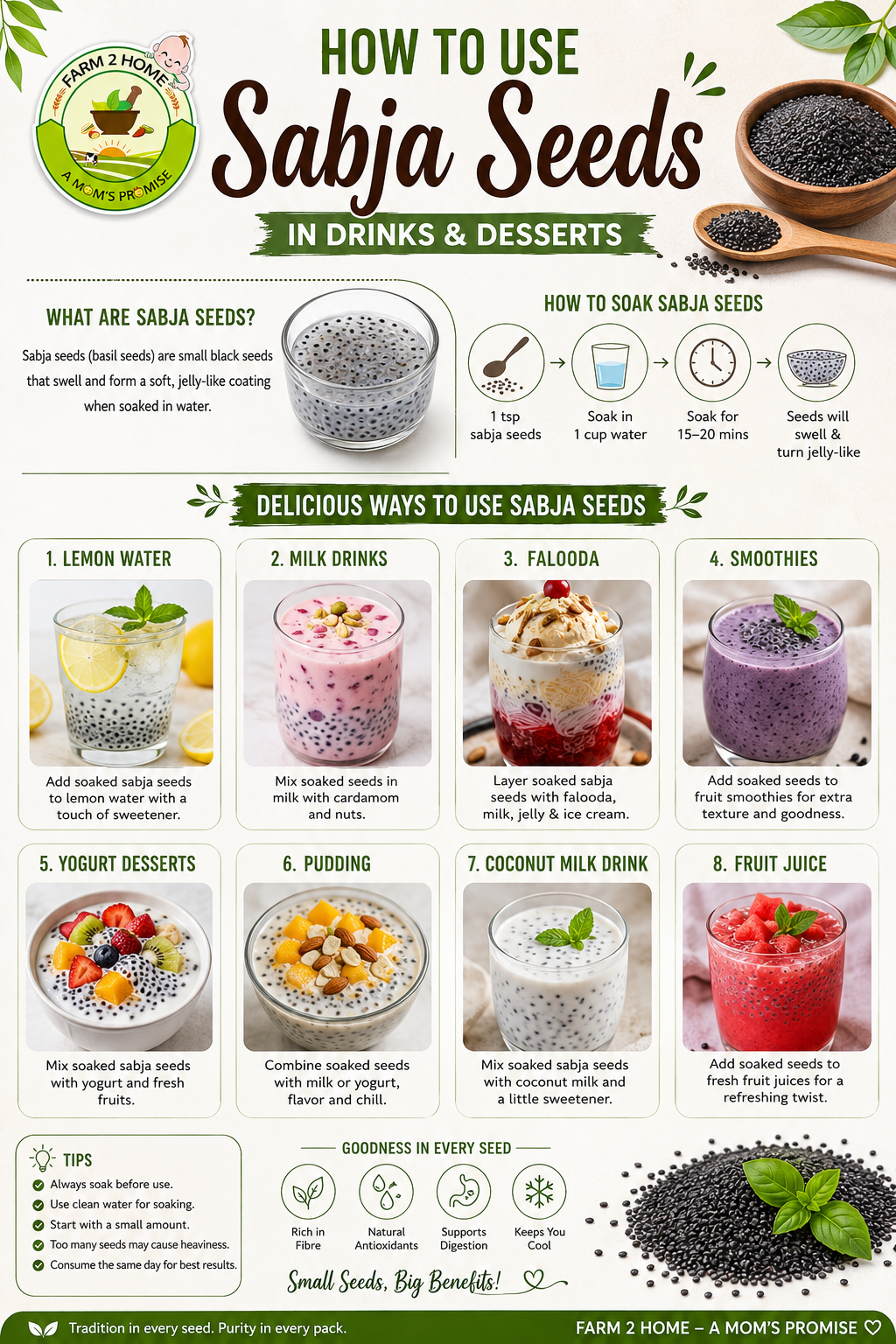
Sabja seeds, also known as basil seeds or tukmaria seeds, are small black seeds commonly used in traditional Indian beverages and desserts. When soaked in water, they develop a soft, jelly-like coating that makes them interesting to use in refreshing drinks, puddings, smoothies, and other recipes.
If you are wondering how to use sabja seeds, the most important step is proper soaking. Once prepared, they can be easily added to a variety of everyday foods and beverages.
Farm M2 Home brings traditional ingredients into modern kitchens, making it simple to explore familiar food ingredients in convenient ways.
What Are Sabja Seeds?
Sabja seeds come from the sweet basil plant. They are small, black seeds that are commonly used in Indian and Asian food traditions.
They are often associated with refreshing drinks, especially during warm weather.
Unlike many other seeds, sabja seeds are generally soaked before eating. After soaking, a translucent, gelatinous coating forms around each seed.
This changes their texture and makes them easy to mix into drinks and desserts.
How to Soak Sabja Seeds
Before learning different recipes, it is important to know how to prepare sabja seeds correctly.
Simple Soaking Method
- Take a small quantity of sabja seeds.
- Add them to a bowl of clean water.
- Allow them to soak until they become swollen and develop a jelly-like coating.
- Stir gently to separate the seeds.
- Drain excess water if required.
- Add the soaked seeds to your chosen recipe.
The exact soaking time can vary, so follow the product instructions where provided.
Do not consume large quantities of dry sabja seeds directly. Soaking them first helps them develop their characteristic texture.
1. Sabja Seeds in Lemon Water
One of the easiest ways to use soaked sabja seeds is in a refreshing lemon drink.
Ingredients
- Soaked sabja seeds
- Water
- Fresh lemon juice
- Optional sweetener
- Ice, if preferred
Preparation
Prepare the soaked sabja seeds separately.
Add them to a glass of water with fresh lemon juice.
If desired, add a small amount of your preferred sweetener.
Mix well and serve.
This makes a simple, refreshing beverage for a warm afternoon.
2. Sabja Seeds in Milk Drinks
Sabja seeds can also be added to milk-based beverages.
You can prepare a simple drink using:
- Milk
- Soaked sabja seeds
- Cardamom
- Optional sweetener
- Nuts or dry fruits, if desired
Mix the ingredients and serve chilled or according to your preferred preparation.
Sabja seeds add a distinctive texture to the drink.
3. Sabja Seeds in Falooda
Falooda is one of the most familiar desserts associated with basil seeds.
Soaked sabja seeds can be layered with milk, falooda sev, jelly, ice cream, and other ingredients.
Simple Serving Idea
Add soaked sabja seeds to a glass.
Layer with suitable falooda ingredients.
Add chilled milk.
Top with ice cream or other preferred toppings.
The swollen seeds add a characteristic texture to the dessert.
4. Sabja Seeds in Smoothies
Sabja seeds can be added to smoothies after soaking.
Try blending:
- Banana
- Milk or yogurt
- Mango or berries
- Soaked sabja seeds
You can add the soaked seeds after blending rather than blending them completely if you want to retain their texture.
Avoid adding excessive sweeteners when using naturally sweet fruits.
5. Sabja Seeds in Yogurt Desserts
Another simple way to use sabja seeds is with yogurt.
Add soaked sabja seeds to plain yogurt and combine with fruits such as:
- Mango
- Banana
- Strawberry
- Apple
- Blueberry
You can also add a small amount of nuts or dry fruits.
This creates a simple dessert or snack.
6. Sabja Seeds in Pudding
Sabja seeds can be used in homemade pudding-style recipes.
Combine soaked sabja seeds with milk, yogurt, or another suitable base.
Add fruits or flavouring ingredients such as cardamom or vanilla.
Chill the mixture before serving.
The soaked seeds provide a soft, jelly-like texture.
7. Sabja Seeds in Coconut Milk Drinks
For a traditional-style beverage, soaked sabja seeds can be combined with coconut milk.
Add a suitable amount of coconut milk to a glass.
Mix in soaked sabja seeds.
Add a small amount of sweetener if required.
Serve chilled.
The combination of creamy coconut milk and soft basil seeds creates an interesting texture.
8. Sabja Seeds with Fruit Juice
Sabja seeds can also be added to fruit-based beverages.
Try them with:
- Watermelon juice
- Lemon juice
- Orange juice
- Mango drinks
- Mixed fruit beverages
Always soak the seeds first and add an appropriate amount to the drink.
Are Sabja Seeds Nutritious?
Sabja seeds contain dietary fibre and other nutrients, and they can be included as part of a varied diet.
However, they should not be considered a cure or treatment for any specific health condition.
Adding a small amount of soaked sabja seeds to a balanced meal or beverage is one simple way to enjoy them.
How Much Sabja Seeds Should You Use?
There is no universal serving size for everyone.
Start with a small amount, particularly if you are new to sabja seeds.
Because they swell considerably after soaking, a little dry seed can produce a larger volume after preparation.
Follow the product’s recommended serving size where available.
Sabja Seeds for Children
Parents may wonder whether sabja seeds can be included in children’s foods.
For young children, preparation and supervision are important.
Because soaked sabja seeds have a slippery, gelatinous texture, consider the child’s age and ability to swallow safely.
Avoid giving dry seeds directly.
If your child has specific dietary requirements or allergies, consult a qualified healthcare professional before introducing unfamiliar ingredients.
Tips for Using Sabja Seeds
Always Soak Them
Soaking is an important preparation step.
Use Clean Water
Use clean drinking water when soaking the seeds.
Use Freshly Prepared Seeds
Prepare an appropriate quantity rather than soaking very large amounts unnecessarily.
Don’t Overuse Them
A small amount is generally enough to add texture to drinks and desserts.
Follow Product Instructions
Packaged sabja seeds may have specific preparation or storage recommendations.
How to Store Sabja Seeds
Keep unopened sabja seeds in a cool, dry place.
Protect them from moisture.
After opening, close the package properly.
For soaked seeds, use clean containers and store them appropriately if they are not being consumed immediately.
Always follow the storage instructions on the product packaging.
Why Choose Farm M2 Home Sabja Seeds?
Farm M2 Home focuses on traditional food ingredients that can fit conveniently into modern kitchens.
Sabja seeds are versatile and can be used in refreshing drinks, milk beverages, smoothies, desserts, puddings, and traditional-style recipes.
Their unique soaked texture makes them an interesting ingredient for experimenting with simple homemade recipes.
Learning how to use sabja seeds is simple once you understand the soaking process.
Soaked sabja seeds can be added to lemon water, milk drinks, falooda, smoothies, yogurt, puddings, coconut milk beverages, and fruit juices.
They provide a unique texture and can add variety to everyday recipes.
Always soak sabja seeds before consuming, start with a suitable quantity, and follow the product’s preparation and storage instructions.
With Farm M2 Home Sabja Seeds, you can bring a traditional ingredient into your kitchen and explore easy, refreshing ways to enjoy it in drinks and desserts.


