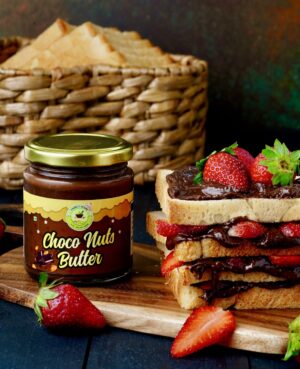
If you have been searching for choco butter, you are most likely looking for a chocolate nut butter: a thick spread ground from nuts and blended with cocoa, used the same way you would use any chocolate spread on bread or chapati. It behaves differently from the glossy jars sold in supermarkets, and knowing how it behaves is the difference between loving the jar and leaving it at the back of the shelf.
Choco butter is a nut-based chocolate spread made by grinding nuts into a butter and blending in cocoa. It is thicker and less sweet than commercial chocolate spreads, slightly grainy rather than silky, and its natural oil separates and needs stirring. Use it on bread, chapati, dosa or in milkshakes.
What choco butter actually is
At its simplest, a choco butter is nuts plus cocoa. The nuts are roasted and ground until the oil in them releases and the paste turns from a crumbly meal into a flowing butter. Cocoa then goes in, which takes the colour dark and shifts the flavour from plainly nutty to chocolate-forward.
The important point is that the base is nut, not oil and sugar. In a factory chocolate spread, the bulk of the jar is sugar and vegetable fat, which is why it stays glossy and spoons out like soft icing even in winter. A nut butter with cocoa is built the other way round, so it is denser, the flavour runs deeper, and the texture has some body to it.
Farm2Home stocks CHOCO NUTS BUTTER at Rs 483, and it sits in that nut-first category. If you have only ever had the supermarket kind, expect a noticeably different jar: darker, stiffer, and less sugary on the tongue.
How chocolate nut butter tastes and feels
Three things usually surprise people on the first spoon. The sweetness is lower, the texture is grainier, and the chocolate reads more like cocoa than like a candy bar.
Lower sweetness means the nut comes through clearly. You taste roasted nut first and chocolate second, which is the opposite of most jars. Children raised on very sweet spreads sometimes need a few days to come around to it; adults who find commercial spreads cloying tend to prefer it straight away.
The grain is normal. Even a well-ground nut butter keeps a faint sandy quality, because you are eating ground nut rather than a conched confection. It is not a fault in the jar and it does not mean the butter has gone off.
On the palate the finish is longer and drier than a sugar-and-oil spread. A thin layer goes a long way. Most people end up spreading less of it than they would of a commercial chocolate spread, simply because the flavour is more concentrated.
Oil separation and the stirring you cannot skip
Open a jar of nut butter that has been standing for a few weeks and you will often see a layer of oil on top with a stiffer paste underneath. This is physics, not spoilage. Nut oil is lighter than the ground solids, so it rises.
Stir it back in with a long, sturdy spoon or the handle end of a butter knife. Push down to the bottom, scrape the corners, and keep folding until the colour is even all the way through. The first stir of a new jar takes a minute of real effort and is the single most useful thing you can do for the texture.
Two practical tips. Stir before the jar goes into the fridge, never after, because cold paste fights back. And if you store the jar upside down between uses, the oil migrates towards what will become the bottom, which makes the next stir easier.
Indian kitchen temperatures and spreadability
Room temperature in India swings a lot across the year, and a nut-based spread notices. In Chennai or Mumbai in May, the jar sits at a temperature where the butter is loose, almost pourable, and spreads onto bread with no resistance at all. In a Delhi or Bengaluru winter morning, the same jar can be stiff enough to tear a slice of soft bread.
The fix for a stiff jar is gentle warmth, not the microwave on full power. Stand the closed jar in a bowl of warm water for five to ten minutes, or keep it near the stove while you make tea. The paste softens evenly and you avoid the scorched, slightly bitter note that direct heat gives cocoa.
For the opposite problem, a jar that has gone too runny in peak summer, a short spell in the fridge firms it up. Take it out fifteen minutes before you need it. Long-term fridge storage is where most people make a jar unpleasant to use, because a cold nut butter sets hard and refuses to spread.
If the jar does come out of the fridge like a brick, do not attack it with a knife. Let it stand on the counter, or dip a spoon in hot water, dry it, and use that to cut through. Patience costs less than a broken spoon.
Ways to use choco butter in an Indian kitchen
The obvious use is bread, and it works, but the spread earns its keep when you step past that.
- On chapati: spread a thin layer on a warm chapati, roll it tight, and you have a tiffin box filler that holds up for hours. Warm chapati softens the butter and makes it spread without tearing.
- On dosa: a plain dosa, slightly crisp, with a smear of chocolate nut butter folded inside. It sounds odd the first time and then becomes a weekend regular in households with children.
- In milkshakes: two spoons into a mixie with cold milk, a banana and ice. The nut solids give the shake body, so you can skip ice cream entirely.
- As a fruit dip: thin it with a spoon of milk or warm water until it loosens, then serve with banana rounds, apple slices or chikoo.
- On toast with banana: the standard, and still the best. Butter first, banana on top, a pinch of salt if you like.
- Stirred into porridge or oats: one spoon at the end, off the heat, folded through while the bowl is hot.
- In baking: swirl it through brownie batter before it goes into the oven, or use it as the filling between two biscuits.
It also works as a dessert shortcut. A spoon over warm rice kheer or on a slice of plain cake turns a simple sweet into something that tastes considered.
Festival gifting and hampers
A jar of nut butter travels well, which makes it a sensible item for a Diwali or Christmas hamper. It does not melt the way chocolate boxes do in transit, it does not need refrigeration, and it lands as something the receiving household will actually finish.
Pair it with a packet of good bread rusk, a jar of honey or a bag of mixed nuts and the hamper reads as deliberate rather than assembled at the last minute. For gifting, mention the stirring bit to whoever receives it. A gift that confuses the recipient on day one does not get used.
If you are buying several jars, order with a buffer before the festival rush. Farm2Home delivers across India, and the days around major festivals are the busiest stretch in the year for every courier network.
Storage, shelf life and what to watch for
Keep the jar closed, in a dry cupboard, away from the stove and away from direct sun. Heat and light are what age nut oil, and a jar left on a sunny windowsill will taste flat long before its date.
Always use a dry spoon. Water in a nut butter is the one real risk, because moisture is what lets mould take hold in an otherwise stable jar. Wet spoons from the sink are the usual culprit.
A nut butter that has turned smells sharp, almost like old paint or stale oil, and the taste follows. That is a different thing from oil separation, which smells perfectly fine. If the only thing wrong is a layer of oil on top, stir and carry on.
Buying choco butter in India
Price per jar varies a lot by how much actual nut is inside, which is the main thing worth comparing. A jar at Rs 483 like Farm2Home’s CHOCO NUTS BUTTER sits in the nut-forward bracket rather than competing with the sugar-heavy supermarket tubs on price per gram, and the two are not really the same product.
Read the panel for what comes first. If a nut is at the top of the list, you are buying a nut butter. If sugar or vegetable fat leads, you are buying a confectionery spread that happens to contain some nut.
Frequently asked questions
Is choco butter the same as a commercial hazelnut chocolate spread?
No. Commercial chocolate spreads are built mostly on sugar and vegetable fat, which gives them a smooth, very sweet, easily spreadable texture. Choco butter is a nut butter with cocoa added, so it is thicker, less sweet, slightly grainy, and its oil separates. The flavour is more nut-driven and less candy-like.
Why is there oil floating on top of my jar?
Because the oil in ground nuts is lighter than the solids and rises over time. It is expected in any nut-based spread and is not a sign that the jar has spoiled. Stir the oil back through thoroughly with a long spoon before the first use and the texture evens out.
Should choco butter be kept in the fridge?
Usually not. A closed jar in a cool, dry cupboard away from the stove is fine. The fridge makes nut butter set hard and very difficult to spread. In peak summer heat, a short spell in the fridge can firm up a jar that has gone too runny, but take it out well before you need it.
How do I soften a jar that has gone too stiff?
Stand the closed jar in a bowl of warm water for five to ten minutes, or leave it in a warm spot in the kitchen. Avoid high microwave heat, which warms unevenly and can give the cocoa a scorched, bitter edge. Stir once it has softened.
Can I use chocolate nut butter in milkshakes and cooking?
Yes. Two spoons blended with cold milk and a banana make a thick shake without ice cream. It also stirs into hot oats off the heat, swirls through brownie batter before baking, and loosens with a little milk into a dip for banana or apple slices.
Does Farm2Home deliver choco butter across India?
Yes, Farm2Home ships across India. Nut butter is a good candidate for courier transport because it does not melt the way moulded chocolate does, though it is still worth ordering a few days ahead during festival weeks when delivery networks are at their busiest.
The short version
Choco butter rewards you for understanding it. Stir the oil in properly, keep it out of the fridge, warm the jar gently when the weather turns cold, and use a dry spoon every time. Do that and the chocolate nut butter jar stays spreadable and good from the first spoon to the last scrape.