Sugar is a common ingredient in everyday cooking and baking. It is used to sweeten tea, coffee, desserts, beverages, snacks, and many traditional recipes. While white sugar remains one of the most widely used sweeteners, coconut sugar has become increasingly popular among people interested in traditional and less-refined sweetening options.
But what is the actual difference between coconut sugar and white sugar? Do they taste different? How are they made? And can coconut sugar be used in the same recipes?
In this article, we explore the key differences between coconut sugar vs white sugar and how each can be used in everyday cooking.
What Is Coconut Sugar?
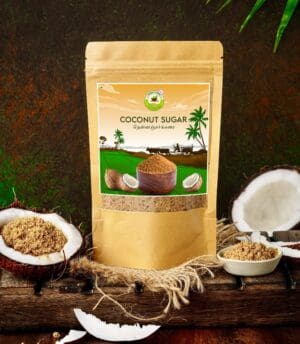
Coconut sugar is a sweetener traditionally made from the sap of the flower buds of the coconut palm.
The collected sap is heated to remove moisture, leaving behind a granulated sweetener. Depending on the production process, coconut sugar can have a brown or golden appearance and a mild caramel-like flavour.
Coconut sugar is sometimes called coconut palm sugar. However, it is different from coconut flesh, coconut milk, and desiccated coconut.
It is primarily used as a sweetening ingredient.
What Is White Sugar?
White sugar, commonly known as table sugar, is generally made from sugarcane or sugar beet.
It undergoes processing and refining to produce the familiar white crystals used in households around the world.
White sugar has a clean, straightforward sweetness and is widely used in:
- Tea and coffee
- Cakes
- Biscuits
- Desserts
- Sweets
- Beverages
- Sauces
- Everyday cooking
Its neutral flavour makes it particularly versatile.
Coconut Sugar vs White Sugar: Main Difference
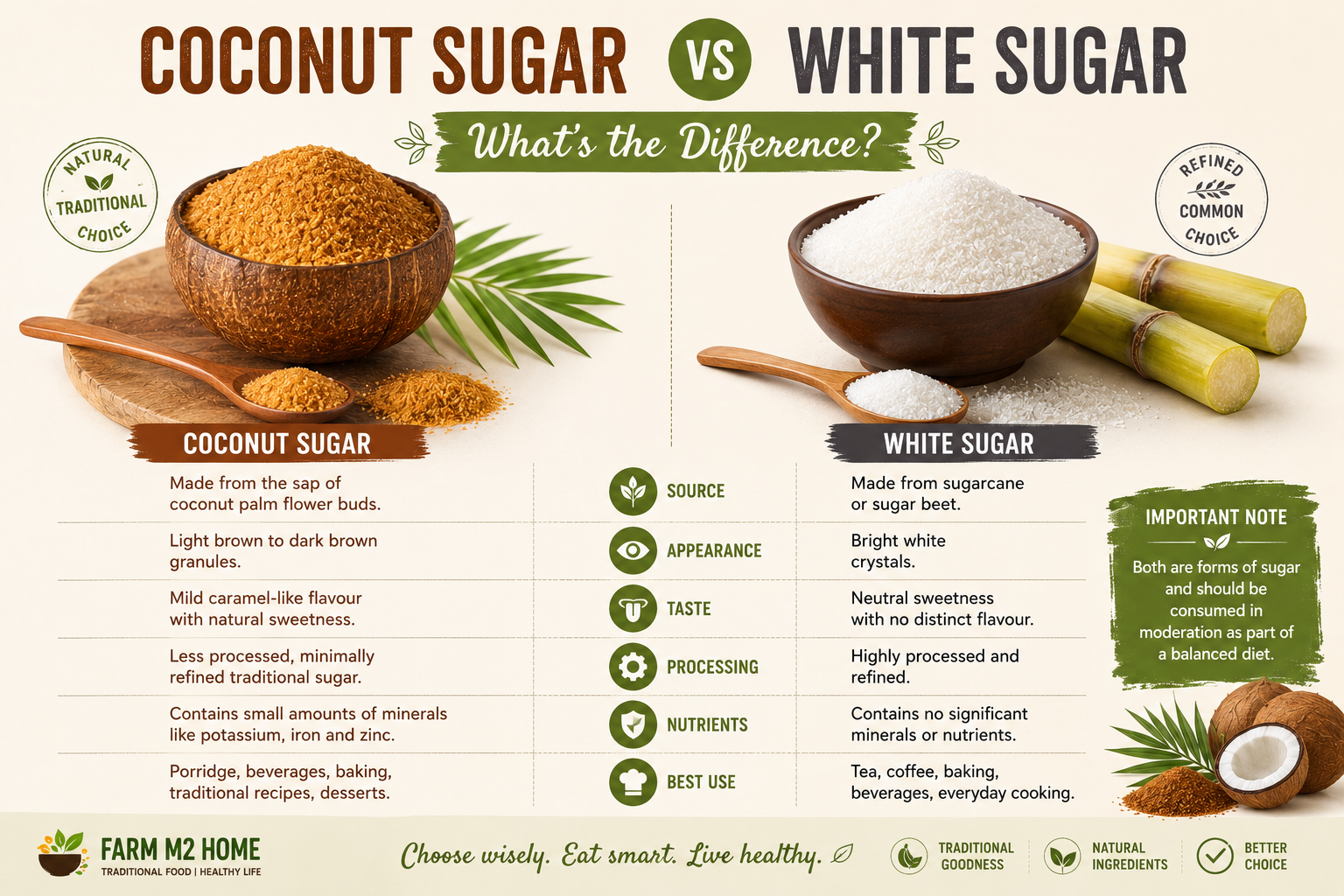
The most obvious difference is their source, appearance, flavour, and processing.
Coconut sugar comes from coconut palm sap, while white sugar is generally produced from sugarcane or sugar beet.
Coconut sugar usually has a brownish colour and a mild caramel-like taste.
White sugar is white and has a more neutral sweetness.
Although coconut sugar is often marketed as a natural alternative, it is still a form of added sugar and should be consumed in moderation.
Difference in Appearance
Coconut sugar typically has a light brown to dark brown colour.
The colour can vary depending on how the sap is processed.
White sugar has a bright white appearance with relatively uniform crystals.
The difference in appearance can affect the colour of the final recipe.
For example, using coconut sugar in a cake or beverage may give the finished product a slightly darker appearance.
Difference in Taste
Taste is another important difference.
White sugar provides a clean and straightforward sweetness.
Coconut sugar tends to have a deeper flavour with mild caramel or earthy notes.
This makes it particularly interesting for recipes where a richer sweet flavour is desirable.
However, the flavour varies between coconut sugar products, so the exact taste can depend on the source and processing method.
Can Coconut Sugar Replace White Sugar?
In many recipes, coconut sugar can be used as an alternative sweetener.
However, it may not always produce exactly the same result.
Because coconut sugar has a darker colour and distinctive flavour, the finished food may taste and look slightly different.
For example, when used in:
- Cookies
- Cakes
- Homemade desserts
- Porridge
- Beverages
- Sauces
the final colour and flavour may change.
For recipes where appearance is important, white sugar may provide a more predictable result.
Coconut Sugar in Tea and Coffee
Some people use coconut sugar to sweeten tea or coffee.
Its caramel-like flavour can add a slightly different taste compared with regular white sugar.
Start with a small quantity and adjust according to your preference.
Remember that coconut sugar still contributes added sugar to the diet.
Coconut Sugar in Porridge
Coconut sugar can be used to sweeten porridge made with oats, millet, ragi, rice, or other grains.
It can pair particularly well with ingredients such as:
- Coconut
- Cardamom
- Nuts
- Dry fruits
- Banana
- Cinnamon
The darker colour of coconut sugar can also give the porridge a more traditional appearance.
Coconut Sugar in Homemade Desserts
Coconut sugar can be used in some homemade desserts and baked foods.
It may work well in:
- Cookies
- Brownies
- Cakes
- Puddings
- Homemade energy bites
- Sweet pancakes
However, recipes designed specifically for white sugar may require small adjustments because coconut sugar can affect colour, flavour, and texture.
Is Coconut Sugar Healthier Than White Sugar?
This is an important question.
Coconut sugar is sometimes promoted as a healthier alternative to white sugar because it is less refined and contains small amounts of certain minerals.
However, it is still primarily a sugar and should not be considered a health food.
The presence of small amounts of minerals does not make coconut sugar a free-use or unlimited sweetener.
Both coconut sugar and white sugar contribute calories and carbohydrates.
For people managing blood glucose, diabetes, or other dietary concerns, the overall quantity of added sugar matters.
What About the Glycemic Index?
Coconut sugar is sometimes promoted as having a lower glycemic index than white sugar.
However, glycemic index values can vary based on the product, testing method, and individual factors.
It is therefore better not to assume that coconut sugar will have a dramatically different effect on blood glucose for everyone.
People with diabetes or blood glucose concerns should follow advice from their healthcare professional.
Nutritional Comparison
The main purpose of both coconut sugar and white sugar is to provide sweetness.
Coconut sugar may retain very small amounts of minerals from the coconut palm sap, but these amounts are not generally large enough to make it a major nutritional source.
White sugar is highly refined and primarily provides sucrose.
Neither should replace nutrient-rich foods such as fruits, vegetables, whole grains, nuts, seeds, pulses, and other whole foods.
Which Sugar Should You Choose?
The answer depends on your personal preference and recipe.
Choose Coconut Sugar If:
- You enjoy caramel-like flavours.
- You prefer its traditional or natural-style appeal.
- You want a brown-coloured sweetener.
- You are comfortable using it as part of a balanced diet.
Choose White Sugar If:
- You want a neutral sweetness.
- You need a white-coloured sweetener.
- You are following a recipe specifically designed for white sugar.
- You prefer its familiar taste and texture.
The important point is that both should be consumed in moderation.
Tips for Using Coconut Sugar
When using coconut sugar for the first time, keep these tips in mind:
Start with a small quantity: Adjust sweetness according to your taste.
Check the ingredients: Choose products with clear ingredient information.
Store properly: Keep the sugar dry and protected from moisture.
Use an airtight container: This helps maintain texture.
Remember portion size: Natural or traditional does not mean unlimited.
Why Choose Farm M2 Home Coconut Sugar?
Farm M2 Home focuses on traditional food products and ingredients that fit modern kitchens.
Coconut sugar can be an interesting addition to everyday cooking for people who enjoy traditional sweetening ingredients and its distinctive caramel-like taste.
It can be used in beverages, porridges, homemade snacks, and selected dessert recipes.
Always check the product packaging for ingredients, storage information, and other product-specific details.
The comparison between coconut sugar vs white sugar comes down to several factors, including source, appearance, flavour, processing, and culinary use.
Coconut sugar is made from coconut palm sap and generally has a brown colour with a mild caramel-like taste. White sugar is usually made from sugarcane or sugar beet and has a neutral sweetness.
While coconut sugar may offer a different flavour and traditional appeal, it is still an added sugar. It should not be considered a limitless or automatically healthy replacement for white sugar.
The best choice depends on your recipe, taste preference, and overall dietary pattern. Whichever sweetener you choose, keeping added-sugar intake moderate is an important part of a balanced eating routine.
Farm M2 Home brings traditional ingredients into modern kitchens, helping families explore familiar food choices in convenient ways.