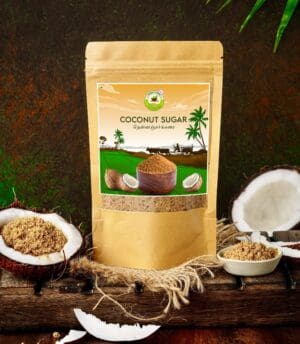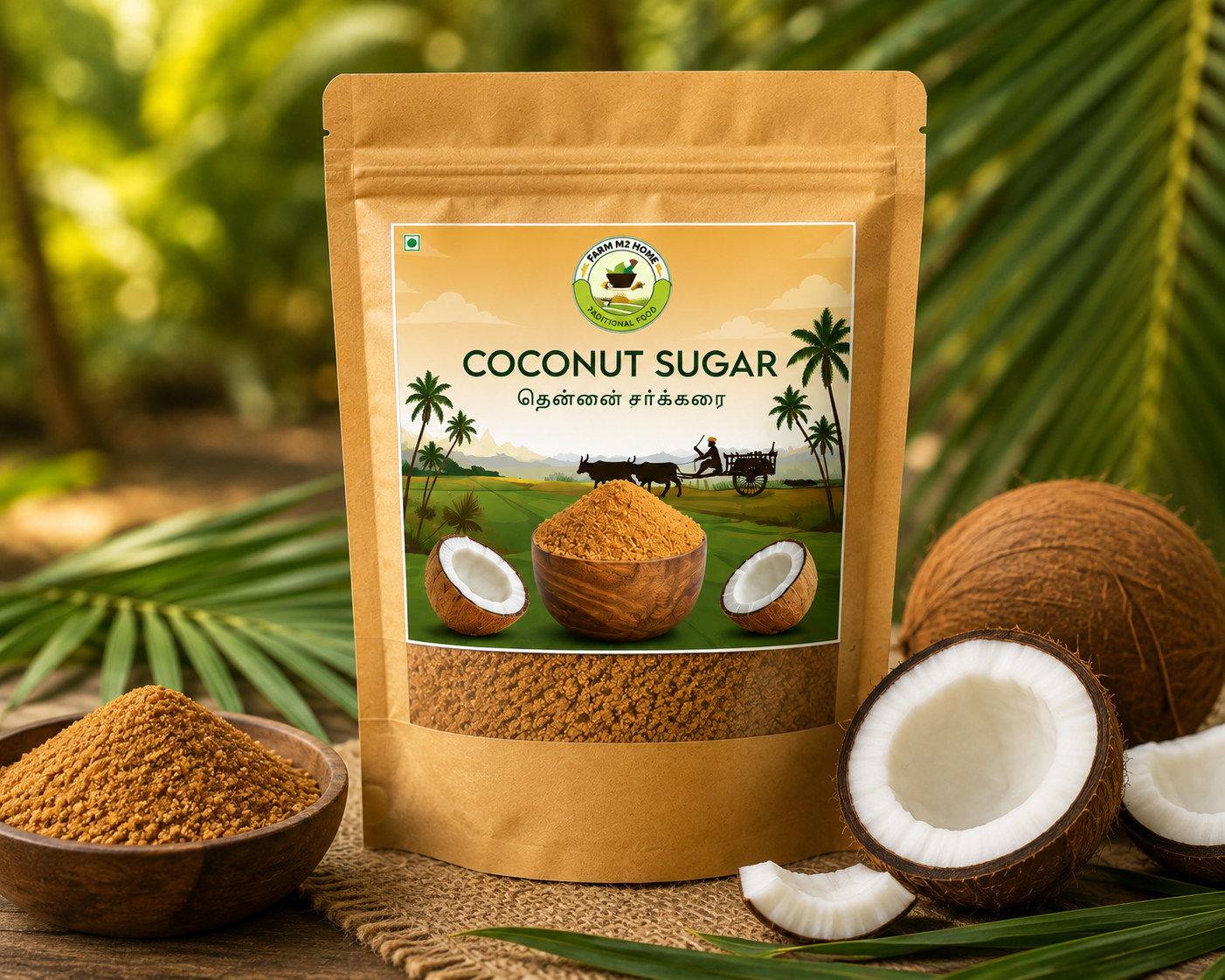
Learning how to use coconut sugar can be a simple way to add a different flavour to everyday drinks and homemade recipes. Coconut sugar has a naturally caramel-like taste and a brown colour, making it an interesting alternative when you want something different from regular white sugar.
Coconut sugar is made from the sap of coconut palm flower buds. Although it has a traditional and less-refined image, it is still an added sugar and should be used in moderation. The main reason people choose it is often its distinctive flavour, colour, and culinary versatility.
Farm M2 Home brings traditional ingredients into modern kitchens, making it easier to explore familiar food choices in everyday recipes.
What Is Coconut Sugar?
Coconut sugar, also known as coconut palm sugar, is produced from the sap of coconut palm flowers. The sap is heated to remove moisture and then processed into granules.
It usually has a light to dark brown colour and a flavour that can remind you of caramel or brown sugar.
Coconut sugar is different from coconut products such as coconut milk, coconut oil, coconut flour, or desiccated coconut. Its primary purpose is to add sweetness to food and beverages.
Why Use Coconut Sugar?
One reason people enjoy coconut sugar is its distinctive taste.
White sugar generally has a clean and neutral sweetness, while coconut sugar can provide a deeper, caramel-like flavour.
It can be used in:
- Tea
- Coffee
- Milk
- Porridge
- Smoothies
- Desserts
- Cookies
- Cakes
- Pancakes
- Homemade snacks
The amount required depends on the recipe and your preferred level of sweetness.
1. How to Use Coconut Sugar in Tea
Tea is one of the easiest beverages in which to try coconut sugar.
Simple Method
Prepare your favourite tea as usual.
Add a small amount of coconut sugar while the tea is warm and stir until it dissolves.
Taste the tea and adjust the sweetness if needed.
Because coconut sugar has its own flavour, it may slightly change the taste of your regular tea.
Tea Combinations to Try
Coconut sugar can work particularly well with teas containing ingredients such as:
- Ginger
- Cardamom
- Cinnamon
- Cloves
- Black tea
- Herbal tea
For example, a warm ginger-cardamom tea sweetened with a small amount of coconut sugar can have a rich, aromatic flavour.
2. How to Use Coconut Sugar in Coffee
If you normally use white sugar in coffee, coconut sugar can be an easy ingredient to experiment with.
Prepare your coffee normally and add coconut sugar while it is hot.
Stir thoroughly and taste.
The caramel-like notes of coconut sugar can complement the roasted flavour of coffee.
You can also use it in homemade cold coffee.
Blend coffee with milk, ice, and a suitable amount of coconut sugar for a refreshing drink.
Remember that coconut sugar is still sugar, so adding large quantities does not make the beverage healthier simply because the sweetener is less refined.
3. Coconut Sugar in Milk
Coconut sugar can also be used to sweeten warm milk.
Heat the milk and add a small amount of coconut sugar.
You can add flavouring ingredients such as cardamom or cinnamon according to your preference.
This can be a simple evening beverage.
If you are already using naturally sweet ingredients such as dates or dry fruits, you may need less additional sugar.
4. How to Use Coconut Sugar in Porridge
Porridge is another simple way to use coconut sugar.
It can be added to:
- Oat porridge
- Ragi porridge
- Millet porridge
- Rice porridge
- Wheat porridge
Prepare the porridge according to your usual recipe.
Add coconut sugar toward the end and mix well.
You can also combine it with ingredients such as:
- Banana
- Grated coconut
- Almonds
- Walnuts
- Cardamom
- Cinnamon
- Dry fruits
These combinations can create a flavourful breakfast or snack.
5. Coconut Sugar in Desserts
Coconut sugar can be used in many homemade desserts.
Its brown colour and caramel-like flavour can be particularly suitable for desserts with warm or nutty flavours.
You can experiment with it in:
Cookies
Replace some or all of the sugar in selected cookie recipes with coconut sugar. The cookies may become darker in colour and develop a deeper flavour.
Cakes
Coconut sugar can be used in certain cake recipes. Keep in mind that it may change the colour and flavour of the finished cake.
Pancakes
Add coconut sugar to pancake batter or use a small amount as a topping.
Homemade Laddoos
Coconut sugar can be combined with suitable nuts, seeds, coconut, or grains in homemade laddoos.
Puddings
It can also be used as a sweetener in selected homemade pudding recipes.
6. Coconut Sugar in Smoothies
Smoothies often contain naturally sweet ingredients such as bananas, dates, mangoes, or other fruits.
Because these ingredients already provide sweetness, additional sugar may not always be necessary.
If you still want extra sweetness, add a small amount of coconut sugar and blend well.
For example, you can prepare a banana smoothie with:
- Banana
- Milk or suitable milk alternative
- Dry fruits or nuts
- A small amount of coconut sugar
Adjust the ingredients according to your taste and dietary requirements.
7. Coconut Sugar for Baking
Coconut sugar can be used in selected baking recipes.
However, it is important to remember that different types of sugar can behave differently in baking.
Coconut sugar may affect:
- Colour
- Flavour
- Texture
- Moisture
- Browning
If a recipe specifically calls for white sugar, replacing it completely with coconut sugar may change the final result.
For beginners, try using coconut sugar in simple recipes before experimenting with more delicate baked goods.
Coconut Sugar vs White Sugar in Recipes
The biggest difference is flavour and appearance.
Coconut sugar: Brown colour, caramel-like flavour, traditionally made from coconut palm sap.
White sugar: White crystals, neutral sweetness, generally made from sugarcane or sugar beet.
Both are sources of added sugar.
Choosing coconut sugar does not mean you can consume unlimited amounts. Portion size and overall dietary intake still matter.
How Much Coconut Sugar Should You Use?
There is no single amount that works for every recipe.
The right quantity depends on:
- The recipe
- Other sweet ingredients
- Personal taste
- Serving size
- Dietary requirements
A good approach is to start with a smaller quantity and adjust the sweetness gradually.
If you are following a packaged recipe, use the recommended amount.
Tips for Using Coconut Sugar
Start Small
Coconut sugar has a distinctive taste, so begin with a small amount.
Mix Well
When using it in hot drinks, stir thoroughly to help it dissolve.
Check the Label
When buying packaged coconut sugar, check the ingredient information and product details.
Store Properly
Keep coconut sugar in an airtight container away from moisture.
Remember Moderation
Coconut sugar is still an added sugar, so use it as part of a balanced eating pattern.
Is Coconut Sugar a Healthy Sweetener?
Coconut sugar is often described as a natural or less-refined sweetener. However, it is still primarily used as a source of sweetness and should not be treated as a health food.
Some coconut sugar products may contain small amounts of minerals, but these amounts do not make coconut sugar a substitute for nutrient-rich foods.
If you are managing diabetes, blood glucose, or another specific dietary condition, follow guidance from a qualified healthcare professional.
Why Choose Farm M2 Home Coconut Sugar?
Farm M2 Home focuses on traditional food ingredients that can fit into modern household routines.
Coconut sugar can be a versatile pantry ingredient for people who enjoy its distinctive flavour. From tea and coffee to porridge, smoothies, baking, and homemade desserts, there are many ways to use it.
Always check the product packaging for specific ingredients, storage instructions, and other product information.
Knowing how to use coconut sugar gives you many options beyond simply adding it to tea.
You can use it to sweeten coffee, warm milk, porridge, smoothies, pancakes, cookies, cakes, laddoos, and other homemade desserts.
Its brown colour and caramel-like flavour can give familiar recipes a slightly different character. However, coconut sugar remains an added sugar, so moderation is important.
With simple experimentation, Farm M2 Home Coconut Sugar can become a convenient ingredient for adding traditional-style sweetness and flavour to everyday drinks and recipes.