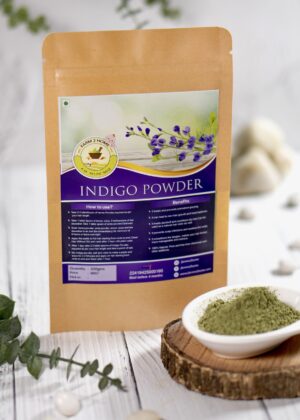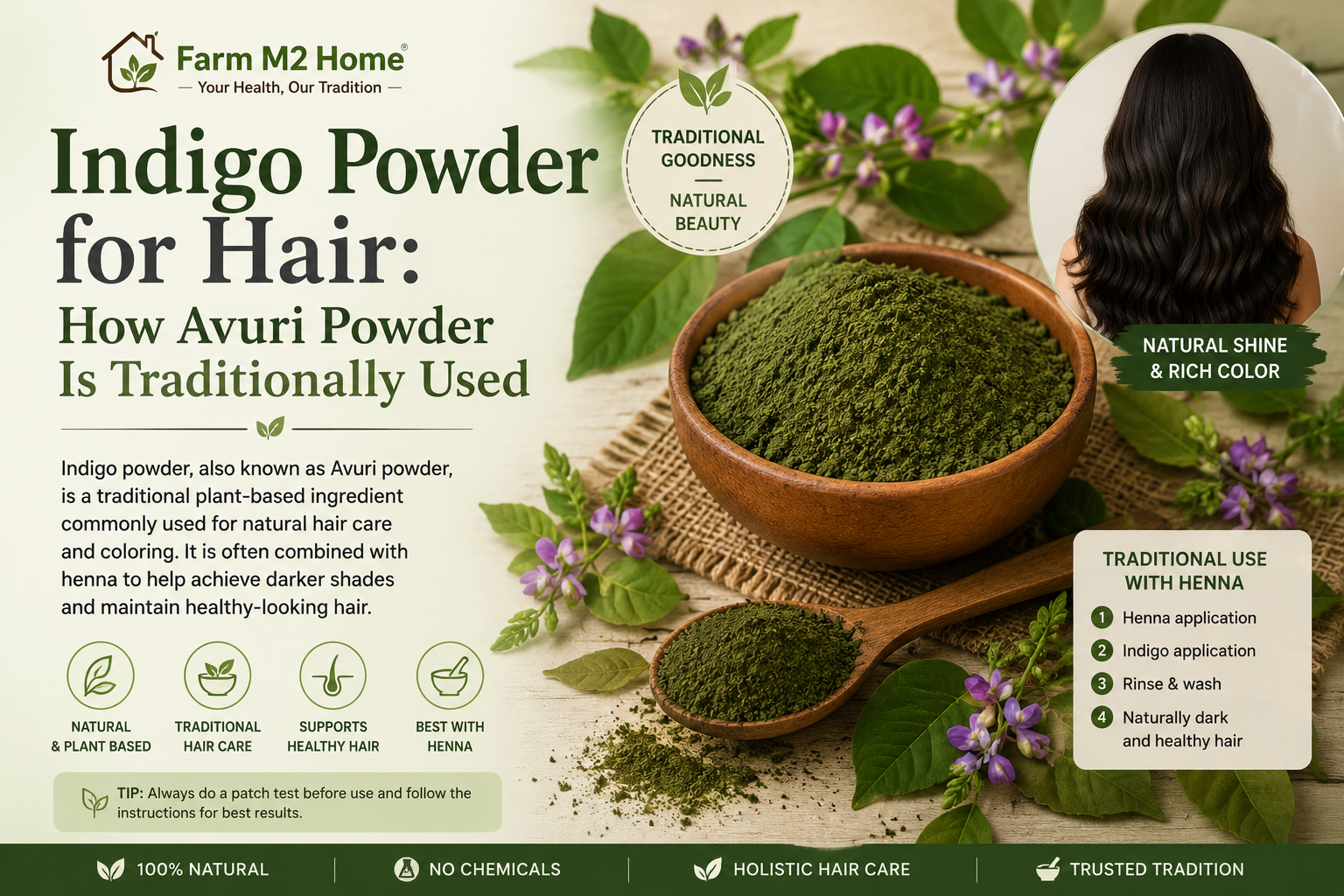
Natural hair-care ingredients have been part of Indian beauty traditions for generations. Among these traditional ingredients, Indigo Powder, commonly known as Avuri Powder, is widely used as a plant-based hair-care and natural coloring ingredient. It is especially popular among people who prefer traditional approaches to hair coloring and want to explore plant-based alternatives.
Indigo Powder is made from the leaves of the indigo plant, which are dried and finely ground. When used appropriately, it can be combined with other traditional ingredients such as henna to create different shades of hair color.
Farm M2 Home brings traditional ingredients into modern routines, making it easier to explore familiar plant-based products and traditional hair-care practices.
What Is Indigo Powder?
Indigo Powder is a fine greenish-blue powder obtained from the leaves of the indigo plant, commonly associated with Indigofera tinctoria. The plant has a long history of use as a natural dye.
In traditional hair care, indigo powder is often used alongside henna. Henna generally provides warm reddish or copper tones, while indigo can contribute darker shades when used in a suitable hair-coloring process.
Because the result can vary depending on the starting hair color, preparation method, application time, and whether henna is used, it is important to have realistic expectations.
What Is Avuri Powder?
In Tamil, indigo is commonly referred to as Avuri. Avuri Powder is therefore often used as another name for Indigo Powder in traditional hair-care discussions.
The powder is usually prepared from dried and powdered plant leaves. Its natural color and plant origin make it popular among people interested in traditional hair-care routines.
However, not every product marketed as “Avuri Powder” will have exactly the same formulation. Always check the ingredient list and product label before use.
How Is Indigo Powder Traditionally Used for Hair?
One of the most common traditional approaches is to combine Indigo Powder with henna.
The process may involve applying henna first and then using indigo afterward, particularly when a darker shade is desired. Another approach is to combine the two ingredients in a controlled mixture depending on the desired result.
The exact method can differ based on the starting hair color and the shade someone wants to achieve.
For packaged Farm M2 Home products, always follow the preparation and application instructions provided on the product packaging.
Indigo Powder and Henna
Henna and indigo are two different plant-based coloring ingredients.
Henna can produce warm shades such as orange, copper, or reddish brown. Indigo can contribute deeper blue-black or brown tones when used appropriately.
This is why the two ingredients are often discussed together in natural hair-coloring routines.
For example, someone with naturally dark hair may use a henna-and-indigo routine to create a deeper brown or darker appearance. The final result can vary considerably from person to person.
Basic Preparation
Before applying Indigo Powder, it is important to prepare the mixture correctly.
A general traditional approach involves placing the required amount of powder in a clean bowl and adding the appropriate liquid gradually to create a smooth paste.
The amount of water depends on the quantity of powder being used.
Some users may prepare indigo with plain water, while specific product instructions may recommend a particular preparation method.
Avoid using extremely hot water unless the product instructions specifically recommend it.
How to Apply Indigo Powder
Once the paste is prepared, it can be applied to clean hair according to the product instructions.
Step 1: Prepare Your Hair
Hair should generally be clean and free from excessive oil or styling products.
Step 2: Prepare the Paste
Mix the recommended quantity of Indigo Powder with the suggested liquid until you achieve a smooth, spreadable consistency.
Step 3: Apply Carefully
Apply the paste evenly to the hair, working section by section.
Wear suitable gloves because the mixture can stain the hands and surrounding surfaces.
Step 4: Allow It to Process
Leave the mixture on the hair for the recommended period. Processing time can affect the final result.
Step 5: Rinse
Rinse the hair thoroughly according to the product directions.
Avoid judging the final color immediately if the product instructions indicate that the shade may develop further after rinsing.
Can Indigo Powder Cover Grey Hair?
Indigo is traditionally used as part of natural hair-coloring routines for grey hair. However, the result depends on several factors, including the natural hair color, percentage of grey hair, previous chemical treatments, and whether henna is used.
Indigo alone may not produce the same result as a two-step henna-and-indigo process.
If you are trying it for the first time, performing a small strand test before applying it to the entire head can help you understand the expected color.
Benefits of Using a Plant-Based Hair Color
Many people choose plant-based hair-coloring ingredients because they want to explore alternatives to conventional coloring products.
Indigo Powder can offer:
- A plant-based coloring option
- A traditional hair-care experience
- The ability to combine with henna
- Different possibilities for creating darker shades
- A simple powder format that can be prepared at home
However, “natural” does not automatically mean that a product is suitable for everyone. Individual reactions can occur with botanical ingredients as well.
Important Safety Tips
Before applying Indigo Powder to your hair, consider doing a patch test according to the product instructions.
A strand test is also recommended, especially if you have previously colored or chemically treated your hair.
Avoid applying the product to irritated or damaged skin.
Protect your clothing, bathroom surfaces, and hands because plant-based powders can leave stains.
If you experience irritation or an unusual reaction, stop using the product and seek appropriate professional advice.
Who Can Use Indigo Powder?
Adults interested in traditional plant-based hair coloring may choose to explore Indigo Powder if it is suitable for them.
People with sensitive skin, allergies, scalp conditions, or previously chemically treated hair should take additional care.
If you are pregnant, breastfeeding, or using medication and have concerns about using a particular hair-care product, consult a qualified healthcare professional before use.
How to Store Indigo Powder
Proper storage helps maintain the quality of the powder.
Keep Indigo Powder:
- In a cool and dry place
- Away from moisture
- Away from direct sunlight
- In a tightly sealed package
- Away from contamination
Always check the manufacturer’s storage instructions and best-before date.
Why Choose Farm M2 Home?
Farm M2 Home focuses on bringing traditional ingredients into modern households. Avuri or Indigo Powder is one such traditional ingredient that can be incorporated into a plant-based hair-coloring routine.
For those interested in traditional beauty practices, Indigo Powder provides an opportunity to explore an ingredient with a long history of use as a natural dye.
Indigo Powder for hair, also known as Avuri Powder, is a traditional plant-based ingredient commonly used for natural-looking hair coloring. It is particularly well known for being combined with henna to create deeper shades.
The final result can vary depending on hair type, natural hair color, existing grey hair, preparation method, and application time. Therefore, a strand test and careful following of product instructions are important.
Farm M2 Home makes traditional ingredients accessible for modern lifestyles, helping people explore familiar plant-based practices in a convenient way.