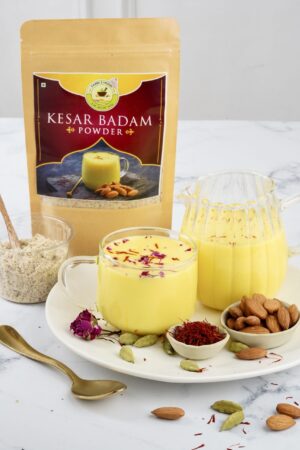
Kesar badam is a milk-based Indian drink made from saffron and almonds, usually sold as a ready powder you stir into hot or cold milk. One glass needs about two teaspoons of powder in 150 to 200 ml milk. It tastes mildly sweet and nutty, with the floral aroma and pale gold colour that saffron gives.
Most families in India know the flavour long before they know the name. It is the badam milk served at weddings in steel tumblers, the chilled glass handed out at a Navratri gathering, the thick warm version your grandmother made in winter. Kesar badam is simply that combination written down as a recipe: kesar for aroma and colour, badam for body and nuttiness, milk to carry both.
This guide covers what goes into the mix, how to prepare it hot and cold, how much powder to use per glass, how to store the packet through a humid Indian summer, and which Farm2Home packs suit which use. Farm2Home delivers across India.
What exactly is kesar badam?
Kesar is saffron, the dried red stigma of the crocus flower, most of India’s supply coming from Kashmir. Badam is almond. Put them together in milk and you get the drink that menus write as kesar badam milk, badam kesar doodh, or just badam milk.
A packaged mix saves you the long part of the job. Making it from scratch means soaking almonds overnight, peeling each one, grinding them to a paste, and steeping saffron separately so the colour releases properly. A powder has that already done and dried.
The Kesar Badam Mix in a 100g pack at Rs 288.75 is the straightforward version: almond, saffron and sugar ground fine enough to dissolve without lumps. A 100g pack is a sensible first buy because it lets you find your own sweetness and thickness before committing to more.
Why the colour matters
Saffron does not turn milk bright orange. Real kesar gives a soft yellow to pale amber tone that deepens as the glass stands. If a powder turns milk a strong orange within seconds, that is colour added from elsewhere. Pale gold is the honest sign.
How to prepare kesar badam at home
The method barely changes between hot and cold. What changes is how long you give the saffron to open up.
Hot kesar badam milk
- Warm 150 to 200 ml milk in a pan. Do not let it reach a rolling boil.
- Take two teaspoons of the mix into a cup and add two spoons of the warm milk. Stir into a smooth paste first. This single step is what stops lumps.
- Pour the paste back into the pan, stir on low flame for a minute or two.
- Pour out and let it stand half a minute. The aroma comes forward as it settles.
Chilled kesar badam for summer
- Make the paste with a little warm milk as above, because saffron releases its colour far better in warm liquid than cold.
- Add the rest of the milk cold, stir well, then refrigerate for an hour.
- Serve over ice. Chilling flattens sweetness slightly, so taste before you add any extra sugar.
Two teaspoons per glass is the usual starting point. Go to three if you like it thick, closer to the badam milk sold at sweet shops. Children generally prefer it thinner and less sweet, so start low.
Badam pisin, the other almond ingredient
Badam pisin confuses first-time buyers, and it is worth clearing up because it is not the same thing as almond powder. Badam pisin is almond gum, the hardened resin from the almond tree, sold as small crystals. It is a South Indian favourite in summer coolers and falooda.
You do not stir it into milk directly. The crystals are soaked in water for six to eight hours, where they swell into a clear jelly many times their original size. That jelly is then spooned into milk, rose syrup, nannari sharbat or a tender coconut drink. It has almost no flavour of its own and adds texture rather than taste.
The badam pisin crystals in a 100g pack at Rs 204.75 go a long way, since a small spoon of crystals yields a bowl of set jelly. A common Tamil Nadu summer serving is kesar badam milk with a few spoons of soaked pisin at the bottom of the glass, giving you aroma, nuttiness and a cool jelly bite together.
A note on soaking
Use plenty of water, far more than looks necessary. Unsoaked crystals left too dry stay gritty. If the jelly smells sour, the soak water sat too long in the heat, so change the water once midway during a hot afternoon.
Kesar badam flavour in other mixes
The kesar and badam pairing is not limited to plain badam milk. The Calcirich instant drink mix in the kesar flavour at Rs 288.75 carries the same saffron note in an instant format, which suits mornings when nobody has time to stand over a pan. It mixes into warm or cold milk the same way, with the paste-first trick still being the best insurance against lumps.
Between the three, the choice is mostly about occasion. Keep the classic kesar badam mix for proper glasses of badam milk and for festival days. Keep the kesar-flavoured Calcirich mix for quick weekday use. Keep almond gum crystals for the summer months when cold drinks and falooda come out.
Storage in Indian conditions
Humidity is the real enemy of any milk powder mix. Monsoon air turns fine powder into hard clumps within weeks if the packet is left loose.
- Shift the powder into a dry airtight steel or glass jar once you open the pack.
- Use a completely dry spoon every time. One damp spoon is enough to spoil the lot.
- Keep the jar in a cool dark shelf, away from the stove and away from direct sun.
- Store badam pisin crystals dry and sealed. Soak only what you need for that day, and keep the soaked jelly refrigerated, finishing it within a day or two.
Serving ideas beyond the glass
Kesar badam powder is useful in the kitchen past the drink itself. Stir a spoon into kheer near the end of cooking for aroma and a thicker body. Whisk it into thick curd with a little sugar for a quick shrikhand style bowl. Fold it into basundi, or dust it over kulfi before serving.
During Diwali and Navratri, a jug of chilled kesar badam milk is easier to manage for guests than making individual drinks on demand. Make it a few hours ahead, keep it cold, and stir before pouring since almond solids settle at the bottom.
Frequently asked questions about kesar badam
How much kesar badam powder should I use per glass?
Two teaspoons of powder to 150 to 200 ml milk is the standard ratio. Use three teaspoons for a thicker, sweeter glass closer to sweet shop badam milk. Mix the powder into a little warm milk first to avoid lumps.
Can kesar badam be made with cold milk?
Yes. Make the paste with two spoons of warm milk so the saffron colour and aroma release, then top up with cold milk and chill. Adding powder straight to cold milk tends to leave lumps and a weaker colour.
Is badam pisin the same as badam powder?
No. Badam powder is ground almonds. Badam pisin is almond gum, sold as crystals that are soaked in water for six to eight hours until they swell into a clear jelly. Pisin adds texture to drinks, not almond flavour.
Can kesar badam be made without sugar?
The packaged mixes already contain sugar, so you need not add more. If you want an unsweetened version, grind peeled almonds at home and steep saffron separately, then sweeten with jaggery or dates to taste.
Why is my saffron milk not turning yellow?
Saffron needs warmth and a few minutes to release colour. Steep it in warm milk rather than cold, and give the glass a short rest before serving. The colour should settle at pale gold, not bright orange.
Does Farm2Home deliver kesar badam across India?
Yes. Farm2Home ships the kesar badam mix, badam pisin and the kesar Calcirich drink mix to addresses across India, in sealed packs suited to transit through humid weather.