Nuts and seeds for hair growth are becoming a popular topic among people interested in supporting healthy hair through everyday food choices. Hair health is influenced by many factors, including genetics, age, overall diet, lifestyle, and general health. While no single food can guarantee hair growth, a balanced diet that provides essential nutrients can support normal hair and scalp health.
Nuts and seeds are convenient foods that can add protein, healthy fats, vitamins, minerals, and other nutrients to everyday meals. Farm M2 Home brings a variety of traditional and nutritious food ingredients into convenient options for modern families.
Why Nutrition Matters for Hair
Hair is made primarily of a protein called keratin. The body needs a balanced supply of nutrients to support normal hair growth and maintenance.
A diet that lacks important nutrients may affect overall hair health. This is why focusing on a varied diet is generally more useful than depending on a single “hair growth” food.
Nuts and seeds can be part of this approach because they contain a combination of nutrients that complement a balanced eating pattern.
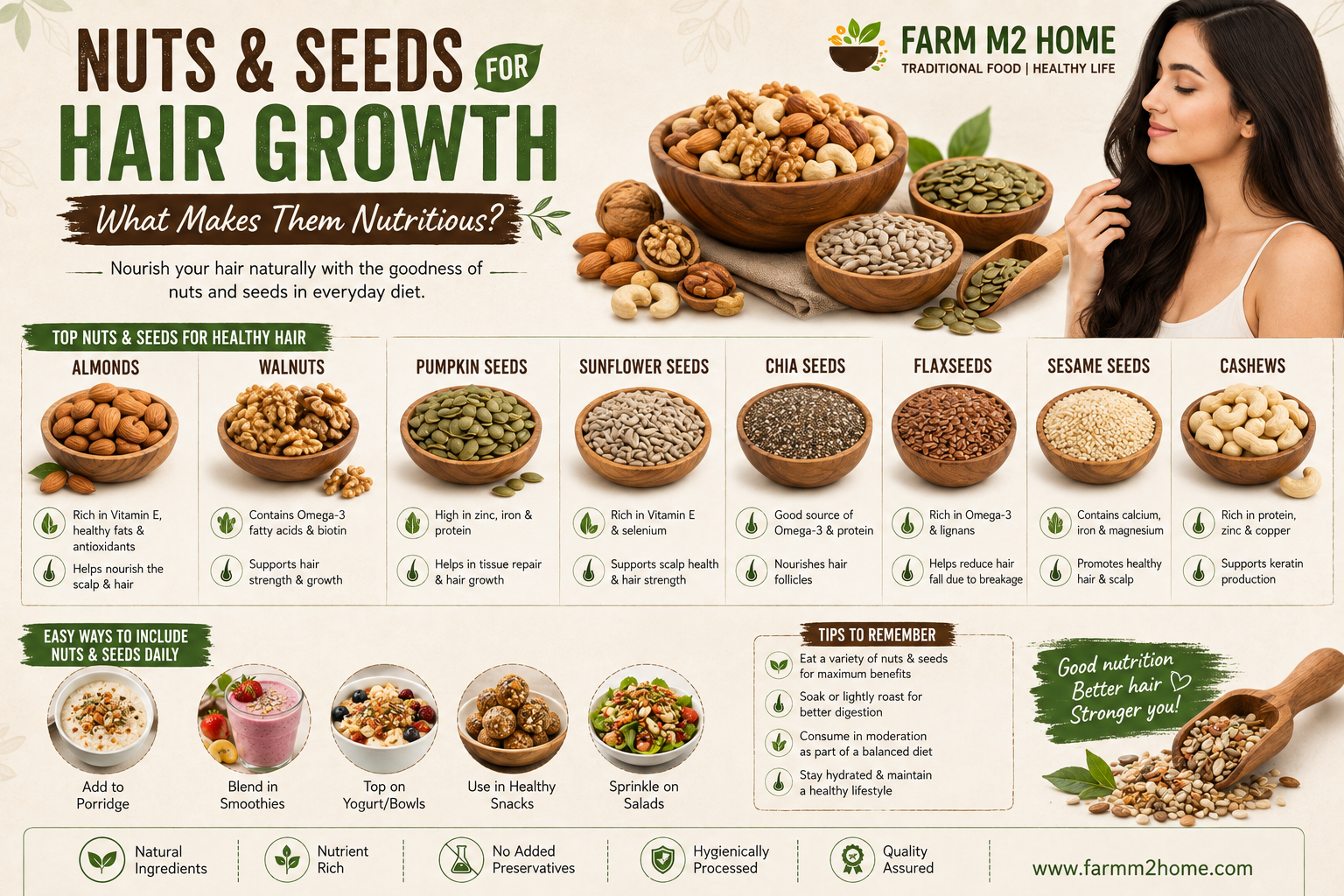
1. Almonds
Almonds are one of the most popular nuts used in everyday diets.
They provide protein, healthy fats, fibre, vitamin E, magnesium, and other nutrients.
Almonds can be eaten as a snack or added to breakfast foods, smoothies, porridge, and homemade recipes.
For people looking to include nuts and seeds for hair growth in their diet, almonds are a simple ingredient to consider.
2. Walnuts
Walnuts are another nutritious nut that can be included in a balanced diet.
They contain healthy fats, protein, fibre, and several micronutrients.
Walnuts can be eaten on their own or added to:
- Oatmeal
- Porridge
- Smoothies
- Yogurt
- Salads
- Homemade snacks
Their slightly crunchy texture also makes them an easy addition to breakfast bowls.
3. Pumpkin Seeds
Pumpkin seeds are small but nutrient-dense seeds.
They provide protein, healthy fats, magnesium, zinc, iron, and other nutrients.
Zinc and iron are important nutrients for normal body functions, although eating pumpkin seeds alone should not be considered a treatment for hair loss.
Pumpkin seeds can be sprinkled over porridge, salads, yogurt, or breakfast bowls.
They can also be enjoyed roasted as a snack.
4. Sunflower Seeds
Sunflower seeds are another convenient seed that can add variety to meals.
They contain healthy fats, protein, vitamin E, and other nutrients.
They can be added to:
- Smoothies
- Salads
- Breakfast bowls
- Homemade granola
- Yogurt
- Porridge
Using different seeds rather than relying on only one type can help create more variety in your diet.
5. Chia Seeds
Chia seeds contain fibre, plant-based omega-3 fatty acids, protein, and other nutrients.
They can be added to yogurt, smoothies, overnight oats, or homemade puddings.
Because chia seeds absorb liquid, they are commonly soaked before consumption in certain recipes.
A varied diet can include chia seeds alongside other nuts, seeds, fruits, vegetables, and protein sources.
6. Flaxseeds
Flaxseeds are another source of plant-based omega-3 fatty acids and fibre.
Ground flaxseed is often easier to incorporate into foods than whole flaxseed.
You can add a suitable amount to:
- Smoothies
- Porridge
- Yogurt
- Oatmeal
- Homemade snacks
As with other seeds, portion size is important because seeds can be energy-dense.
7. Sesame Seeds
Sesame seeds have been used traditionally in many Indian recipes.
They provide fats, protein, fibre, calcium, magnesium, and other nutrients.
Sesame can be included in chutneys, laddoos, podis, snacks, and other traditional preparations.
This makes sesame an easy ingredient for families who enjoy traditional foods.
8. Cashews
Cashews are a popular nut used in both sweet and savoury recipes.
They contain protein, healthy fats, copper, magnesium, and other nutrients.
Cashews can be added to porridge, smoothies, desserts, rice dishes, or eaten as part of a suitable snack.
Like other nuts, they should be consumed in appropriate portions.
How Do Nuts and Seeds Support a Balanced Diet?
Nuts and seeds provide a combination of nutrients rather than one specific “hair growth” ingredient.
For example, different nuts and seeds can contribute:
Protein: Important for normal body functions and tissue maintenance.
Healthy fats: Provide energy and include different types of fatty acids.
Vitamin E: An antioxidant vitamin found in foods such as almonds and sunflower seeds.
Zinc: Found in foods such as pumpkin seeds and contributes to normal body functions.
Iron: Present in various plant foods, including some seeds. Iron is important for normal oxygen transport.
Magnesium: Found in many nuts and seeds and involved in numerous body processes.
The amount of each nutrient varies according to the food and serving size.
Easy Ways to Add Nuts and Seeds to Your Diet
You don’t need complicated recipes to include them.
Morning Porridge
Add chopped nuts or ground seeds to ragi, oats, millet, or other porridge.
Smoothies
Blend almonds, walnuts, or a suitable seed powder into a fruit or yogurt smoothie.
Breakfast Bowls
Sprinkle pumpkin seeds, sunflower seeds, chia seeds, or ground flaxseed over yogurt or oats.
Homemade Snacks
Use nuts and seeds in homemade laddoos, energy bites, or snack bars.
Salads
Add roasted seeds to salads for extra crunch and variety.
Nuts and Seeds for Children
Parents may also want to include nuts and seeds in children’s diets.
However, preparation and age are important.
Whole nuts can be a choking hazard for young children. Depending on the child’s age and developmental stage, nuts may need to be finely ground or provided in another suitable form.
Parents should also be aware of nut allergies.
When introducing a new allergenic food, follow appropriate feeding guidance and seek professional advice if needed.
Can Nuts and Seeds Stop Hair Loss?
Nuts and seeds can contribute nutrients to a balanced diet, but they should not be presented as a cure for hair loss.
Hair loss can have many causes, including genetics, hormonal changes, nutritional deficiencies, stress, illness, medications, and scalp conditions.
If someone experiences sudden, severe, or persistent hair loss, it is better to consult a qualified healthcare professional rather than relying only on dietary changes.
How Much Should You Eat?
There is no single serving size that applies to everyone.
Nuts and seeds are nutrient-dense and can also be relatively high in calories, so moderate portions can be appropriate for many people.
A varied diet is more important than eating large quantities of one particular food.
Follow your individual dietary requirements and the serving recommendations of packaged products.
Tips for Choosing Nuts and Seeds
When buying packaged nuts or seeds, check the label.
Look for:
- Clear ingredient information
- Suitable serving size
- Added salt
- Added sugar
- Flavouring ingredients
- Allergen information
- Storage instructions
- Best-before date
Unsalted or minimally processed varieties can be useful when you want greater control over added salt.
How to Store Nuts and Seeds
Nuts and seeds contain natural oils, so proper storage is important.
Keep them in an airtight container.
Store them in a cool, dry place according to the product instructions.
Protect them from moisture, heat, and direct sunlight.
If refrigeration is recommended after opening, follow the manufacturer’s instructions.
Always check for unusual smell, taste, or appearance before consuming.
Why Choose Farm M2 Home?
Farm M2 Home focuses on traditional food products and convenient ingredients that fit modern lifestyles.
Nuts and seeds can be easily included in everyday meals such as breakfast bowls, porridge, smoothies, snacks, and traditional recipes.
By combining different food ingredients rather than depending on a single “superfood,” families can create a more varied and balanced food routine.
Including nuts and seeds for hair growth can be part of a nutritious eating pattern that supports overall health. Almonds, walnuts, pumpkin seeds, sunflower seeds, chia seeds, flaxseeds, sesame seeds, and cashews each provide different nutrients.
However, healthy hair depends on much more than one food. A varied diet, adequate protein, good hydration, appropriate hair care, and overall healthy habits all play a role.
If unexplained or significant hair loss occurs, professional evaluation is important.
With Farm M2 Home, traditional nuts and seeds can be incorporated into everyday meals in simple and convenient ways, helping make nutritious food choices a natural part of your daily routine.