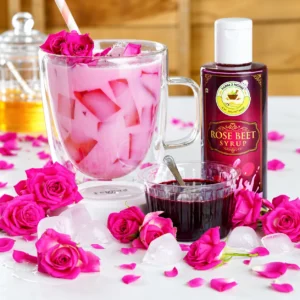
Rose milk syrup is a sweetened rose flavoured concentrate that you stir into chilled or warm milk to make rose milk. A standard serving is two to three tablespoons of syrup in 200 ml of milk, mixed well and served cold over ice. It also forms the base layer for falooda, milkshakes and kulfi.
If you grew up anywhere in Tamil Nadu, rose milk needs no introduction. The tall steel tumbler, the pink froth on top, the shop fan rattling overhead in May. What makes or breaks that glass is the syrup, and most of the bottled rose milk syrup sold in Indian shops gets its bright pink shade from added colour rather than from anything in the bottle itself. This guide covers what rose milk syrup actually is, how to mix it properly, how it behaves in falooda and milkshakes, and how to store it once the bottle is open.
What is rose milk syrup?
Rose milk syrup is a thick, pourable concentrate built on three things: sugar, water and rose flavour, usually from rose essence or rose extract. The sugar does double duty. It carries the flavour and it keeps the syrup stable on the shelf, which is why a good syrup pours slowly and coats the back of a spoon.
The colour is where syrups differ most. Rose petals themselves give very little colour to a sugar syrup, so the familiar neon pink almost always comes from a colouring agent. A naturally coloured syrup takes a different route. Farm2Home’s natural rose milk syrup made with beetroot at Rs 315 draws its pink from beetroot rather than synthetic colour, which means the shade is deeper, slightly earthy and closer to a dark rose than a bubblegum pink.
That is worth knowing before you open the bottle, because the mixed glass looks different. Beetroot pink in milk comes out as a muted rose or dusty pink, not the fluorescent pink of shop rose milk. The rose aroma is the same. Only the colour story changes.
How to make rose milk with rose milk syrup
The whole point of a syrup is that it does not need cooking. You are mixing, not making.
- Chilled rose milk: 2 to 3 tablespoons of syrup into 200 ml of cold milk. Stir for a good twenty seconds so the syrup lifts off the bottom. Add ice last.
- Warm rose milk: warm the milk first, take it off the heat, then stir in 2 tablespoons. Adding syrup to milk on a boiling flame can make the milk look grainy.
- For children: start with 1 to 1.5 tablespoons in 150 ml. Most kids find the full adult pour very sweet.
- Thicker shop style: use full fat milk, 3 tablespoons of syrup, and chill the glass beforehand rather than loading it with ice.
Stir from the bottom upward. Syrup is denser than milk and will sit at the base of the glass if you only swirl the surface, which is how you end up with a bland first half and a cloying last sip.
Hot milk, cold milk and milk type
Cold milk keeps the rose aroma sharp and is how rose milk is drunk through the summer. Warm milk softens the rose and makes it rounder, which suits the cooler months and bedtime glasses. Toned milk gives a lighter drink, full cream gives the thick mouthfeel people associate with shop rose milk. Plant based milks work too, though almond and oat both carry their own flavour, so you may want slightly more syrup to keep the rose forward.
Rose milk syrup in falooda, milkshakes and desserts
Falooda is where rose milk syrup earns its place in an Indian kitchen. Layer soaked sabja seeds at the bottom of a tall glass, then falooda sev, then cold milk mixed with 2 tablespoons of syrup, then a scoop of vanilla or kulfi ice cream, and finish with a drizzle of plain syrup on top so the colour shows through the glass.
For a rose milkshake, blend 200 ml cold milk, 2 tablespoons of syrup and one scoop of vanilla ice cream. Blend in short bursts. Long blending warms the mixture and thins it out.
Other everyday uses:
- Drizzled over vanilla or tender coconut ice cream.
- Mixed into set curd with a little sugar for a quick rose shrikhand style bowl.
- Brushed over sponge cake layers before icing.
- Stirred into cold milk and frozen in kulfi moulds or popsicle sleeves.
- Added to lemonade or plain soda for a rose sharbat, no milk involved.
- Poured over shaved ice for a home version of the pink ice gola.
For festival days, rose milk syrup covers a lot of ground. It is the easy option for a Diwali or wedding welcome drink, and a jug of rose milk mixed an hour ahead and kept in the fridge serves a houseful of guests without anyone standing at the stove.
Choosing a rose milk syrup: what to look at
Four practical points separate one bottle from another.
Colour source. Check whether the pink comes from an added colour or from an ingredient like beetroot. Neither is hidden if you read the label, and it is the single biggest difference in how the finished glass looks.
Consistency. A syrup that runs like water will need more per glass. A thicker syrup mixes into milk more slowly but goes further.
Rose strength. Some syrups lean heavily on sweetness with rose as a background note. Taste half a teaspoon neat before you judge the mixing ratio.
Bottle size against how often you use it. A household that makes rose milk twice a week will finish a bottle comfortably. If it is an occasional thing, buy smaller and store it properly.
Storage after opening
Keep the bottle closed tight and in the fridge once opened. The high sugar content makes syrup stable, but refrigeration protects the aroma and the colour, both of which fade faster at Indian room temperatures.
Always pour, never dip. A wet or used spoon going back into the bottle introduces milk and moisture, and that is the usual reason a half finished bottle goes off. Wipe the neck and threads of the cap after pouring, since dried syrup there stops the cap sealing properly. Store away from direct sunlight, and keep the bottle upright.
If the syrup smells sour, looks cloudy when it was clear, or has fermented fizz at the top, discard it.
Another flavour for the same routine
If rose is not the only flavour your family drinks, the same mixing method works with other milk syrups. Farm2Home’s chocolate milk syrup sweetened with dates at Rs 336 is the obvious companion bottle, with dates doing the sweetening instead of plain sugar. Keeping one rose and one chocolate bottle in the fridge covers both the pink glass and the brown glass without separate powders and shakers.
They are two different things, so do not mix them in the same glass expecting either flavour to survive. Rose is floral and light, chocolate and dates is heavier and darker. Alternate them rather than combining them.
Buying rose milk syrup online in India
Rose milk syrup is sold in most grocery shops, but the naturally coloured versions are harder to find on a local shelf. Farm2Home delivers across India, so a bottle of rose beet syrup reaches you whether you are in Chennai, Coimbatore, Bengaluru, Hyderabad or Delhi. Prices are listed in rupees on the product page.
Frequently asked questions about rose milk syrup
How much rose milk syrup per glass of milk?
Two to three tablespoons of syrup for every 200 ml of milk. Start at two, taste, and add more if you want it sweeter. For children, 1 to 1.5 tablespoons in 150 ml is usually enough.
Is rose milk syrup the same as rose water?
No. Rose water is unsweetened and watery, used in small quantities in sweets and biryani. Rose milk syrup is a thick sweetened concentrate meant to be mixed into milk as a drink. They are not interchangeable.
Why is this rose milk syrup not bright pink?
Because the colour comes from beetroot rather than synthetic colour. Beetroot gives a deeper, earthier pink, so rose milk made with it looks dusty rose instead of neon. The rose flavour and aroma are unaffected.
Can rose milk syrup be used in hot milk?
Yes. Warm the milk, take it off the flame, then stir the syrup in. Warm rose milk has a softer, rounder rose flavour than the chilled version. Avoid adding syrup to milk that is actively boiling.
How long does rose milk syrup last after opening?
Refrigerated, capped tightly and handled with a clean dry pour rather than a dipped spoon, an opened bottle keeps well for weeks. Check the best before date printed on the bottle and discard the syrup if the smell turns sour or it looks cloudy.
Does rose milk syrup work with plant based milk?
Yes. Almond, oat and soy milk all take rose syrup well. Those milks have their own flavour, so you may need slightly more syrup than you would with dairy to keep the rose in front.
What else can I make besides rose milk?
Falooda, rose milkshakes, kulfi and popsicles, rose sharbat with soda or lemonade, a drizzle over ice cream, and a flavouring for curd based desserts or cake layers. The syrup needs no cooking in any of these.