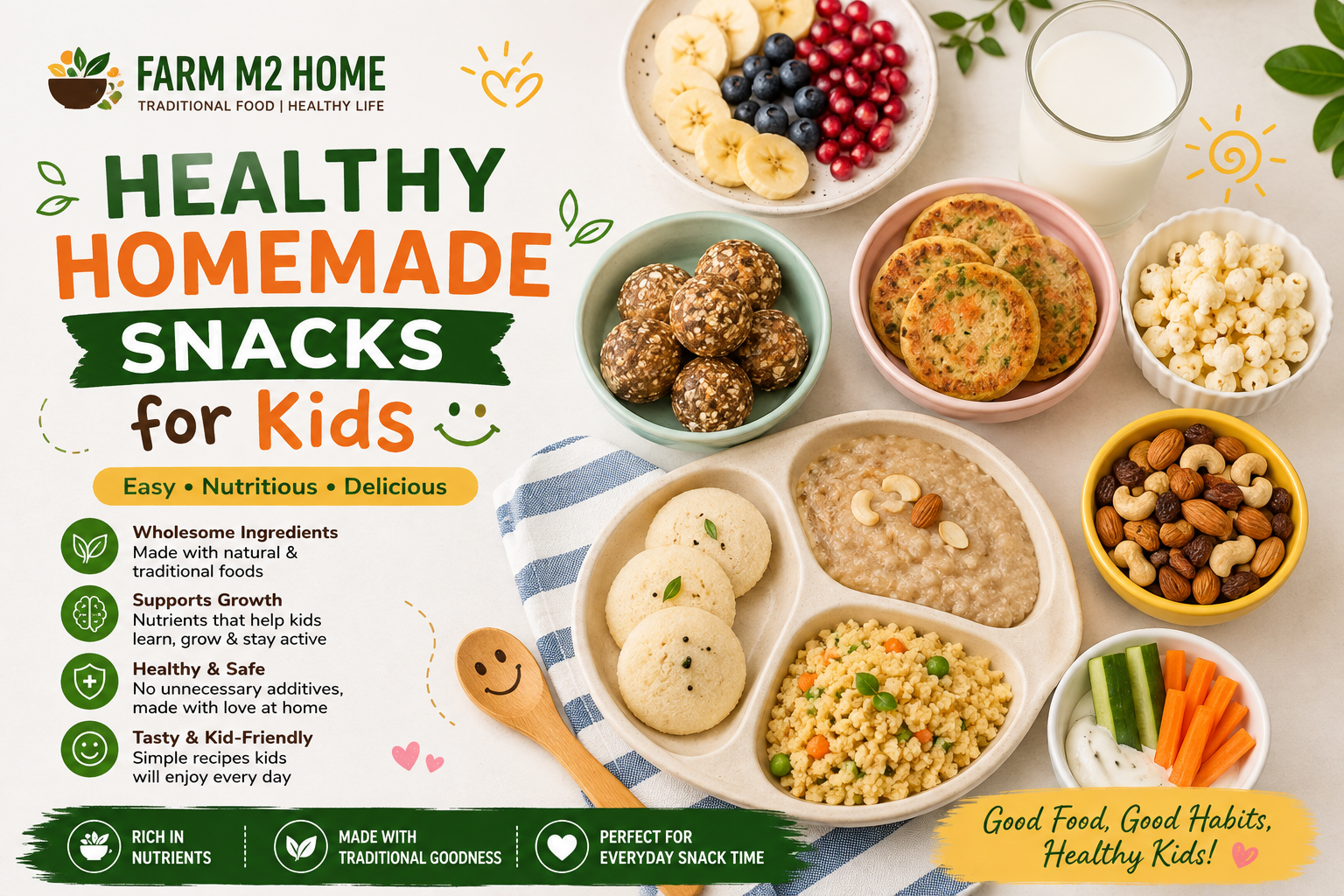
Healthy snacks for kids can be simple, tasty, and enjoyable without relying heavily on highly processed foods. Children are active throughout the day, and suitable snacks can be a convenient way to add variety to their daily meals. From fruits and nuts to traditional millet-based foods and homemade treats, there are many options parents can explore.
Choosing snacks for children is not only about taste. Parents can also look at the ingredients, added sugar, salt, portion size, and overall nutritional value. Farm M2 Home brings traditional food ideas into modern family routines, helping parents discover simple snack choices for everyday life.
Why Are Healthy Snacks Important for Kids?
Children may feel hungry between breakfast, lunch, and dinner. A suitable snack can help bridge the gap between meals while adding variety to their diet.
Instead of making every snack a packaged or sugary food, parents can offer different combinations of fruits, grains, nuts, seeds, dairy foods, and homemade preparations.
The right snack also depends on the child’s age, appetite, dietary needs, and regular meals.
1. Fresh Fruits
Fresh fruits are one of the simplest snack choices for children.
Banana, apple, pear, orange, papaya, watermelon, and other seasonal fruits can be served according to the child’s age and preferences.
For younger children, fruits should be prepared in an age-appropriate texture and size to reduce choking risks.
Parents can also combine fruit with suitable yogurt or another food to make the snack more filling.
2. Dry Fruits and Nuts
Dry fruits and nuts can be included in a child’s diet when age-appropriate and prepared safely.
Almonds, cashews, raisins, dates, and other dry fruits can provide different flavours and textures.
For younger children, whole nuts can be a choking hazard. They should only be offered in an appropriate form, such as a smooth nut butter or finely ground powder, according to the child’s developmental stage and dietary guidance.
Parents should also check for nut allergies before introducing these foods.
3. Homemade Millet Snacks
Millets have been part of traditional Indian food practices for generations.
Ragi, bajra, foxtail millet, little millet, and other millets can be used in different homemade preparations.
Parents can prepare millet-based snacks such as small pancakes, porridge, steamed foods, or homemade bites depending on the child’s age and preferences.
Millet-based foods can add variety to a child’s regular grain choices.
4. Porridge Mix
Porridge can be a convenient snack or breakfast option for children.
A suitable porridge mix may contain grains, millets, pulses, nuts, or other ingredients.
When choosing a packaged porridge mix, parents should carefully check the ingredient list and look for unnecessary added sugar or excessive salt.
The preparation should always follow the instructions on the product packaging.
For younger children, parents should select foods appropriate for their child’s developmental stage.
5. Banana and Homemade Nut Powder
Banana is naturally sweet and easy to combine with other foods.
For children who can safely consume nuts, a small amount of finely prepared nut powder can be combined with mashed banana or another suitable food.
This can create a simple homemade snack without requiring complicated preparation.
Always introduce ingredients individually when appropriate and watch for possible allergic reactions.
6. Homemade Idli
Idli is a familiar traditional food that can work well as a snack for many children.
Mini idlis can be served with a suitable accompaniment depending on the child’s age and eating ability.
Parents can also experiment with ingredients such as ragi or other grains to create different versions.
For younger children, the texture should be soft and easy to manage.
7. Vegetable Pancakes
Vegetables can be incorporated into homemade pancakes using ingredients such as wheat, ragi, or other suitable flours.
Grated carrot, spinach, beetroot, or other vegetables can add colour and variety.
Keep the seasoning mild for children and adjust the texture according to age.
Homemade vegetable pancakes can be served as an afternoon snack or light meal.
8. Homemade Laddoo
Traditional homemade laddoos can be prepared using ingredients such as dates, nuts, sesame seeds, ragi, or other grains.
However, laddoos can be energy-dense, so portion size matters.
Parents should also consider the ingredients used and avoid excessive added sugar.
For younger children, choose an appropriate soft texture and avoid whole nuts or hard pieces that could pose a choking risk.
9. Yogurt with Fruit
Plain yogurt combined with soft fruit can make a simple snack.
Banana, mango, papaya, berries, or other suitable fruits can be mixed with yogurt according to availability and the child’s preferences.
If the yogurt is already sweetened, check the label for added sugar.
Choosing plain yogurt and adding naturally sweet fruit can help parents control the amount of added sugar.
10. Homemade Snack Mix
Older children who can safely eat the individual ingredients can enjoy a simple homemade snack mix.
Parents can combine suitable ingredients such as roasted grains, seeds, dried fruit, or finely prepared nuts.
The combination should be adjusted according to the child’s age, allergies, chewing ability, and dietary requirements.
Avoid making the mix too salty or sugary.
What Should Parents Look for When Choosing Kids’ Snacks?
When buying packaged snacks, the front of the package is not enough. Read the complete nutrition and ingredient information.
Check the Ingredients
Look for familiar ingredients and understand what is included in the product.
Check Added Sugar
Some children’s snacks contain significant amounts of added sugar. Compare products and choose according to your family’s nutritional goals.
Check Salt
Excessive salt is not ideal for children’s diets, so check the sodium information.
Consider Allergens
Common allergens such as nuts, milk, wheat, soy, and other ingredients should be checked carefully, particularly if your child has known allergies.
Look at the Serving Size
A snack marketed as nutritious can still contribute a lot of calories if the portion is very large.
Make Snack Time More Interesting
Children often enjoy foods that look colourful and fun.
Parents can create simple combinations such as:
- Banana with suitable nut powder
- Fruit with plain yogurt
- Mini idlis with vegetables
- Homemade ragi pancakes
- Soft fruit pieces
- Homemade millet snacks
Presenting food in different shapes and combinations can make snack time more enjoyable without relying on sugary treats.
Snacks and Balanced Meals
Snacks should complement regular meals rather than replace them.
Children need a variety of foods throughout the day. Depending on their age and dietary needs, meals can include suitable grains, vegetables, fruits, protein-rich foods, dairy or alternatives, and healthy fats.
Parents should also encourage children to drink enough water throughout the day.
Important Safety Tips for Children
Food safety is especially important for young children.
Avoid giving young children whole nuts, hard pieces, whole grapes, popcorn, or other foods that may present choking risks.
Prepare food in an age-appropriate size and texture.
Always supervise young children while they are eating.
For babies and toddlers, introduce new foods according to appropriate feeding guidance and consider professional advice when necessary.
Why Choose Farm M2 Home?
Farm M2 Home focuses on traditional food products and convenient everyday choices for modern families.
From millet-based foods and porridge mixes to natural ingredients and traditional snacks, Farm M2 Home aims to make familiar food options more convenient for today’s households.
Parents can explore different products while checking ingredients and selecting options that suit their family’s individual needs.
Finding healthy snacks for kids does not have to be complicated. Fresh fruits, suitable nuts and dry fruits, millet-based foods, porridge, homemade idli, vegetable pancakes, yogurt with fruit, and homemade traditional snacks can all provide variety.
The most important step is to choose foods according to the child’s age, dietary needs, allergies, and eating ability. For packaged foods, always check the ingredient list, added sugar, salt, serving size, and allergen information.
With simple planning and a little creativity, snack time can become an enjoyable part of a child’s everyday food routine. Farm M2 Home brings traditional food choices into modern family life, helping parents explore convenient options while keeping variety at the heart of everyday meals.