Keezhanelli is a small traditional herb that has been used in Indian systems of traditional medicine for generations. It is commonly associated with the Phyllanthus group of plants, particularly Phyllanthus amarus. Different Phyllanthus species can look similar, so correct identification is important when using the herb.
Known for its small leaves, tiny fruits, and naturally bitter taste, Keezhanelli has a long history in traditional herbal practices. It is commonly prepared in different forms depending on the tradition, including fresh herb preparations, powders, and herbal formulations.
Farm M2 Home brings traditional ingredients closer to modern households, making it easier to explore familiar herbal ingredients as part of traditional food and wellness practices.
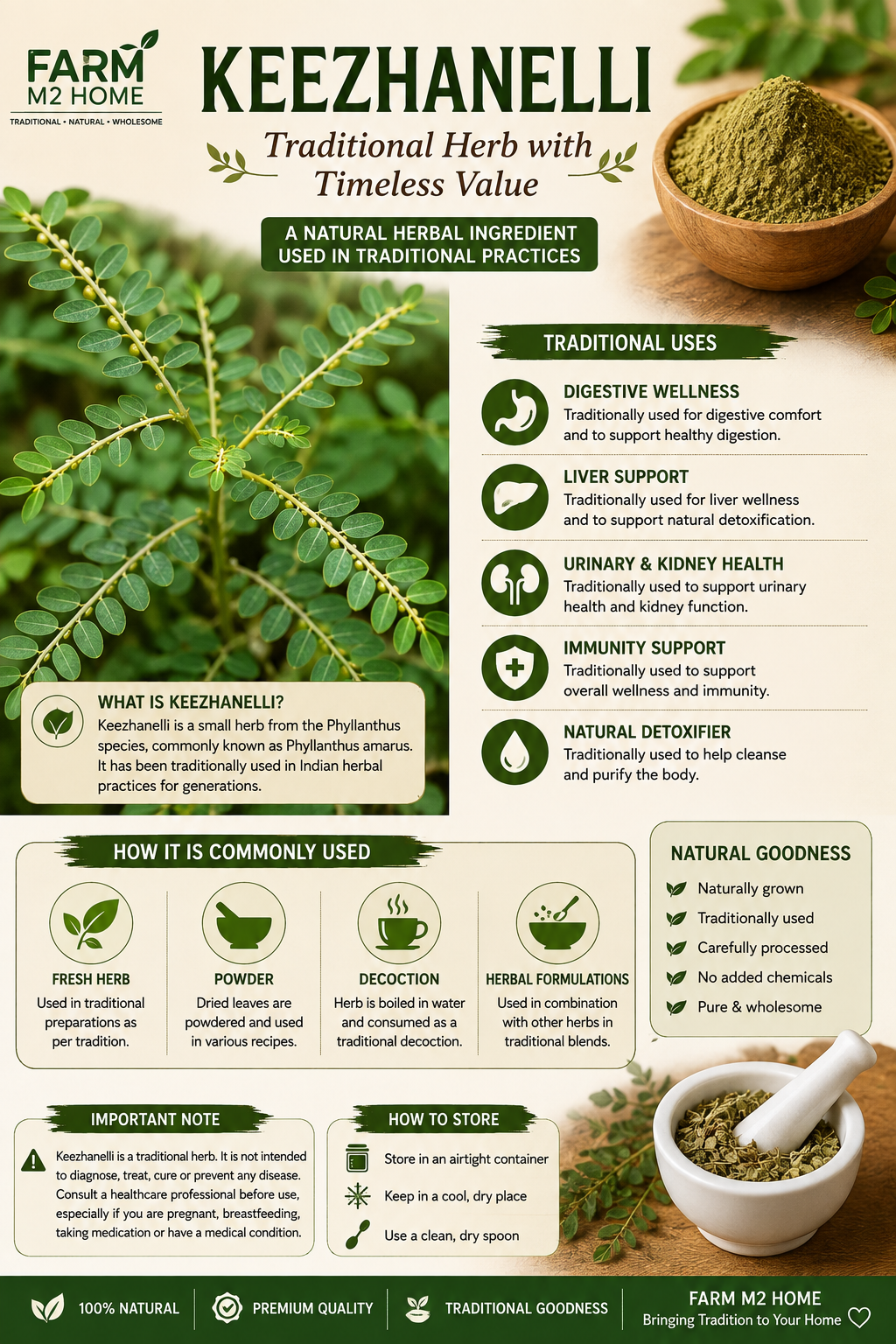
What Is Keezhanelli?
Keezhanelli is a common Tamil name used for certain Phyllanthus herbs. One species frequently discussed in traditional-use literature is Phyllanthus amarus.
The plant is small and generally grows close to the ground. It has delicate branches with small leaves arranged along them. Tiny fruits can appear underneath the branches, which is one of the characteristic features associated with the plant.
The Phyllanthus genus includes many species, and not all of them are identical. Because some species can be difficult to distinguish, proper botanical identification is important before using an herb preparation.
Traditional Use of Keezhanelli
Keezhanelli has a long history of use in Ayurveda and other traditional herbal practices.
Published reviews describe traditional use of Phyllanthus amarus in relation to digestive, urinary, liver, kidney, and other health concerns.
It is important to understand that traditional use does not automatically mean that a herb has been clinically proven to treat a particular disease.
Research on Phyllanthus species has investigated many possible biological activities, but evidence varies depending on the species, preparation, dose, and condition being studied.
1. Traditionally Used for Digestive Wellness
Keezhanelli has traditionally been used in herbal preparations associated with digestive wellness.
Traditional literature describes the use of Phyllanthus amarus for concerns such as indigestion, stomach discomfort, diarrhoea, and related digestive complaints.
Today, people interested in traditional herbs may encounter Keezhanelli in powdered or prepared forms.
However, herbal products should not replace medical treatment for persistent digestive symptoms.
2. Traditional Liver-Related Uses
One of the best-known traditional associations of Phyllanthus amarus is with liver health.
Traditional medicine has used the plant in preparations relating to liver and spleen concerns. Scientific research has also investigated compounds found in the plant and their possible biological activities.
However, it is important not to describe Keezhanelli as a proven treatment for liver disease.
Anyone with jaundice, abnormal liver tests, hepatitis, or another liver condition should consult a qualified healthcare professional rather than relying on an herbal product.
3. Traditional Urinary and Kidney Uses
Phyllanthus species have also been traditionally used in relation to urinary and kidney concerns.
Research reviews describe traditional applications involving the genitourinary system and kidney-related conditions.
These traditional uses have contributed to continuing scientific interest in the plant.
However, a traditional herb should not be used as a substitute for diagnosis or treatment of kidney disease or urinary problems.
4. Contains Naturally Occurring Plant Compounds
Research has identified a variety of naturally occurring compounds in Phyllanthus amarus, including lignans, flavonoids, tannins, polyphenols, triterpenes, sterols, and alkaloids.
These compounds are one reason the plant continues to attract scientific interest.
Laboratory and animal studies have reported several biological activities, but results from such studies cannot automatically be interpreted as proven health benefits in humans.
How Is Keezhanelli Commonly Used?
Traditional use can vary according to the region, preparation, and specific Phyllanthus species.
Keezhanelli may be encountered as:
- Fresh herb
- Dried herb
- Herbal powder
- Decoction
- Traditional herbal formulation
The appropriate preparation depends on the specific product and intended traditional use.
If you are using a packaged Keezhanelli powder, follow the preparation and serving instructions provided by the manufacturer.
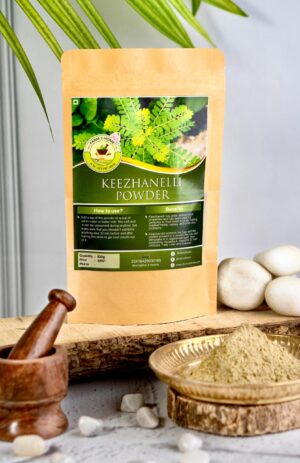
Keezhanelli Powder
Dried Keezhanelli can be processed into a powder.
Powdered herbs are convenient because they can be stored more easily than fresh plants and used according to the product’s instructions.
When purchasing herbal powder, check:
- Botanical or ingredient information
- Product ingredients
- Manufacturing details
- Packaging
- Storage instructions
- Best-before date
This is particularly important because different plants can have similar common names.
How to Store Keezhanelli Powder
Keep herbal powder in a dry, clean place.
Moisture can affect the quality of powdered herbs, so the package should be tightly closed after each use.
Use a clean, dry spoon when handling the powder.
Always follow the storage instructions printed on the Farm M2 Home packaging.
Why Correct Identification Matters
The Phyllanthus genus contains many different species.
Some can be visually similar, and traditional names can vary between regions.
Scientific reviews have specifically highlighted the importance of correct identification because different Phyllanthus species may be mixed or confused during collection and preparation.
For this reason, buying properly labelled herbal products from a reliable source is preferable to collecting an unidentified plant from the wild.
Is Keezhanelli a Medicine?
Keezhanelli is traditionally used as a medicinal herb, but it should not automatically be treated as a proven medicine for a particular illness.
Scientific research is ongoing, and reviews have noted the need for better clinical evidence for many traditional applications.
If you have a diagnosed health condition or take prescription medicines, speak with a healthcare professional before using concentrated herbal preparations.
Who Should Be Careful?
Herbal products can interact with medicines or may not be suitable for everyone.
Pregnant or breastfeeding individuals, children, older adults, and people with chronic medical conditions should seek professional advice before using concentrated herbal preparations.
If you experience unusual symptoms after consuming an herbal product, stop using it and seek appropriate medical advice.
Why Choose Farm M2 Home?
Farm M2 Home focuses on traditional ingredients and herbal products for modern households.
Keezhanelli represents a long-standing part of Indian herbal traditions. By choosing a properly labelled product and following the recommended preparation and storage instructions, consumers can explore this traditional ingredient responsibly.
Keezhanelli is a traditional herb associated with the Phyllanthus group and has a long history of use in Indian herbal practices. Traditional literature describes its use in preparations related to digestive, urinary, liver, and other health concerns.
Modern research has also investigated the plant’s phytochemicals and potential biological activities, but traditional use and scientific evidence are not the same thing. More clinical research is needed for many specific health claims.
For everyday use, choose a properly identified and labelled product, follow its instructions, and avoid using Keezhanelli as a replacement for professional medical care.
Farm M2 Home makes traditional ingredients accessible for households interested in exploring India’s rich herbal food and wellness traditions.