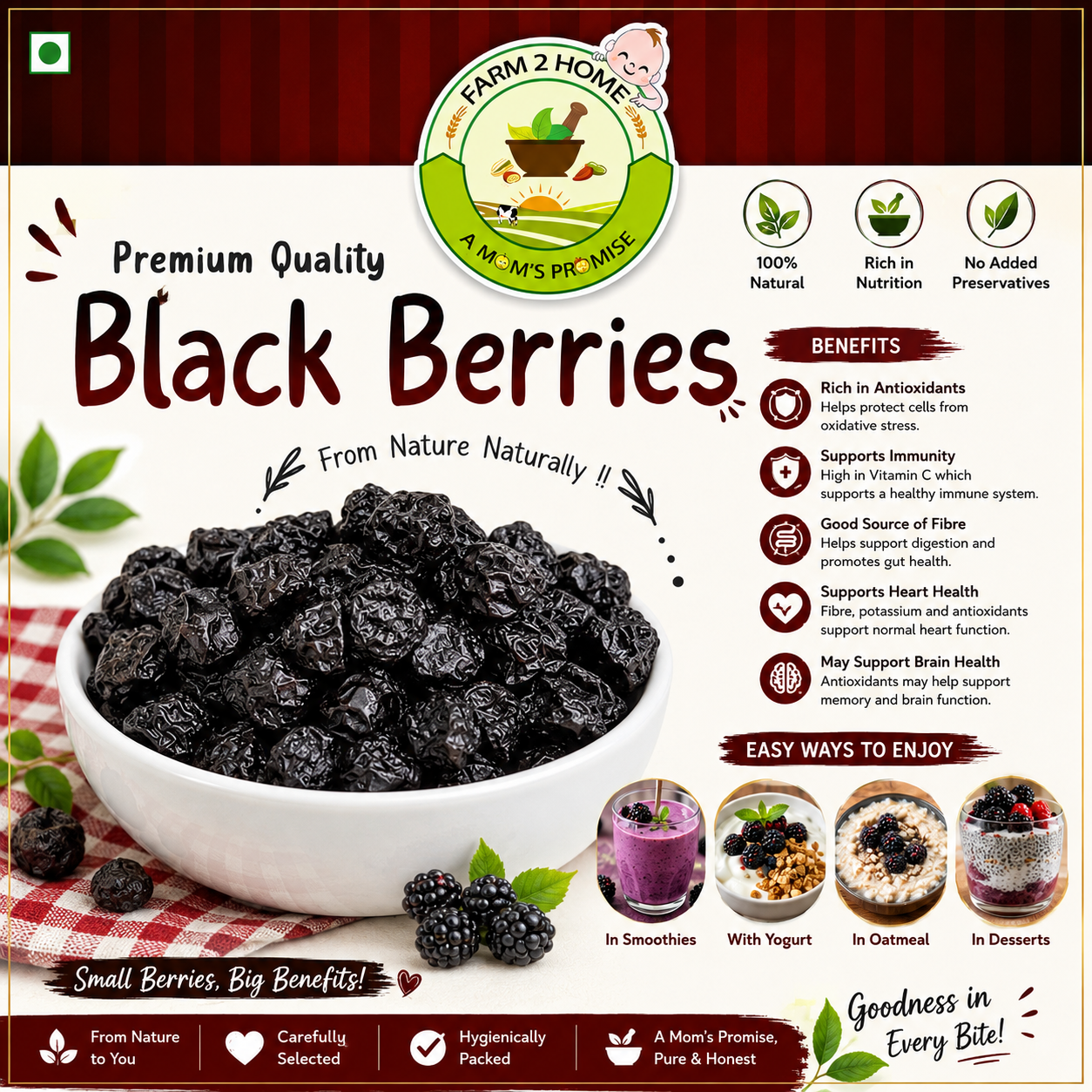
Blackberries benefits are attracting attention because these small, dark-coloured berries are both flavourful and versatile. Blackberries can be enjoyed fresh, frozen, blended into smoothies, added to breakfast bowls, or used in homemade desserts.
They are naturally colourful fruits that provide fibre, vitamin C, vitamin K, manganese, and other nutrients. Like other fruits, blackberries can be part of a balanced and varied diet.
In this article, let’s explore the nutritional value of blackberries, their potential benefits, and simple ways to include them in everyday meals.
What Are Blackberries?
Blackberries are small berries made up of clusters of tiny fruit segments called drupelets. They usually have a deep purple to almost black colour when ripe.
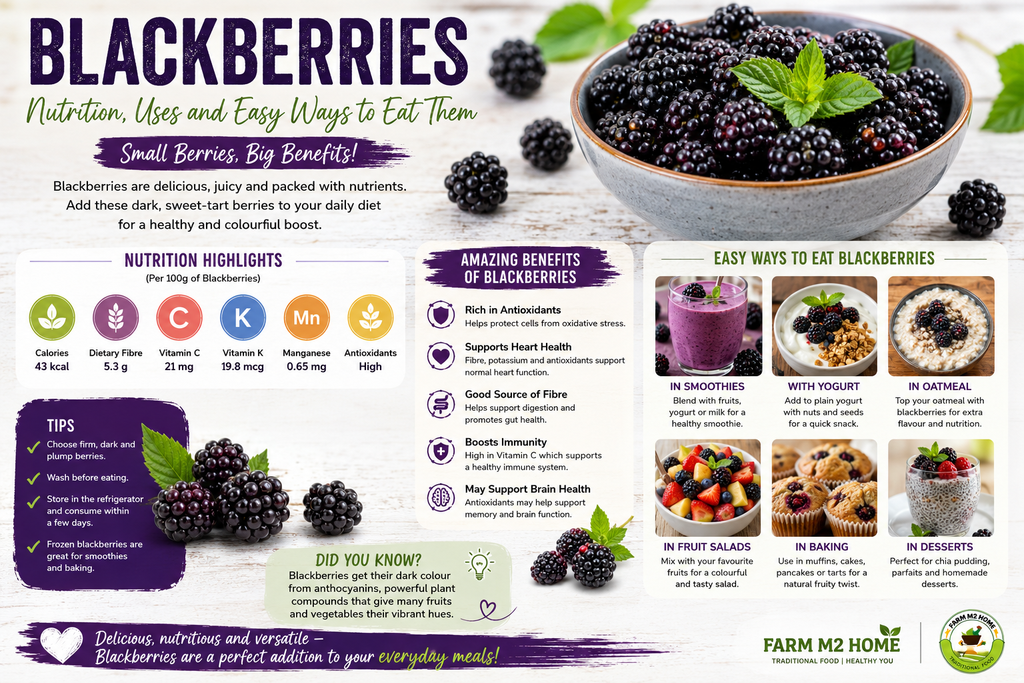
They have a combination of sweet and slightly tart flavours, making them suitable for both sweet and savoury recipes.
Blackberries can be eaten fresh or used in:
- Smoothies
- Yogurt bowls
- Oatmeal
- Fruit salads
- Desserts
- Homemade sauces
- Chia puddings
- Breakfast recipes
Blackberries Nutrition
Blackberries are relatively nutrient-dense fruit and provide several important nutrients.
They contain:
- Dietary fibre
- Vitamin C
- Vitamin K
- Manganese
- Folate
- Natural carbohydrates
- Plant compounds such as anthocyanins
The exact nutritional values depend on serving size and whether the berries are fresh, frozen, sweetened, or processed.
Choosing whole, unsweetened blackberries is generally a simple way to enjoy their natural flavour.
1. Rich in Dietary Fibre
One of the important blackberries benefits is their fibre content.
Dietary fibre is an important part of a balanced diet and supports normal digestive health.
Adding fibre-rich fruits such as blackberries to meals can help increase overall dietary fibre intake.
You can add them to oatmeal, yogurt, smoothies, or fruit bowls for an easy serving of fruit.
2. Provide Vitamin C
Blackberries contain vitamin C, an essential nutrient that contributes to normal immune function and helps protect cells from oxidative stress.
Vitamin C also contributes to normal collagen formation.
Including a variety of fruits and vegetables is a good way to obtain vitamin C through the diet.
3. Contain Antioxidant Plant Compounds
The dark purple-black colour of blackberries comes partly from naturally occurring plant pigments called anthocyanins.
Anthocyanins are a type of flavonoid found in many colourful fruits and vegetables.
Blackberries also contain other plant compounds.
Eating a variety of colourful plant foods can help provide a broad range of naturally occurring compounds as part of a balanced diet.
4. Support a Fibre-Rich Diet
If you are trying to include more fibre in your meals, blackberries can be an easy addition.
Instead of eating them alone, you can combine them with other fibre-rich foods such as oats, chia seeds, nuts, or whole grains.
For example, a breakfast bowl containing oats, blackberries, nuts, and yogurt can provide a combination of different nutrients and textures.
5. A Convenient Fruit for Breakfast
Breakfast is one of the easiest times to include blackberries.
Try adding them to:
Oatmeal
Add fresh or thawed blackberries to warm oatmeal.
Yogurt
Combine plain yogurt with blackberries and a small amount of nuts or seeds.
Smoothie Bowls
Blend blackberries with banana and yogurt or milk, then add suitable toppings.
Pancakes
Use blackberries as a topping for homemade pancakes.
These simple combinations can make breakfast more colourful and flavourful.
6. Blackberries in Smoothies
Blackberries are excellent smoothie ingredients because their natural colour gives the drink an attractive purple shade.
Simple Blackberry Smoothie
You can blend:
- Blackberries
- Banana
- Milk or a suitable milk alternative
- Plain yogurt, if desired
- Chia seeds or nuts, if preferred
Blend until smooth and serve fresh.
If the fruit is already sweet enough, there may be no need to add sugar.
7. Blackberries and Yogurt
Blackberries pair well with yogurt.
For a simple snack, add blackberries to plain yogurt and top with chopped almonds, walnuts, or seeds.
This combination provides different textures and flavours.
For children, adjust the serving and ingredients according to their age and dietary requirements.
8. Blackberries in Fruit Salads
Blackberries can be combined with other fruits to create a colourful fruit salad.
Try combining them with:
- Apple
- Banana
- Orange
- Strawberry
- Grapes
- Blueberries
A mixed fruit bowl provides variety and makes a simple snack or breakfast option.
9. Blackberries in Homemade Desserts
Blackberries can also be used in desserts.
They can be added to:
- Homemade puddings
- Chia pudding
- Fruit parfaits
- Muffins
- Homemade cakes
- Fruit tarts
When preparing desserts, remember that additional sugar can increase the overall added-sugar content.
Using naturally sweet fruits can help add flavour without relying entirely on added sweeteners.
10. Fresh vs Frozen Blackberries
Both fresh and frozen blackberries can be useful.
Fresh Blackberries
Fresh berries are convenient for direct eating and can be added immediately to breakfast bowls and salads.
Frozen Blackberries
Frozen berries can be useful when fresh berries are not available.
They are particularly convenient for smoothies.
If buying packaged frozen blackberries, check the label and choose unsweetened options when appropriate.
How to Choose Good Blackberries
When buying fresh blackberries, look for berries that appear:
- Plump
- Firm
- Dark in colour
- Free from visible mould
- Free from excessive moisture
Very soft or mouldy berries should be avoided.
If buying packaged or frozen products, check the ingredients, storage instructions, and best-before date.
How to Store Blackberries
Fresh blackberries are delicate and can spoil quickly.
Keep them refrigerated and handle them gently.
It is generally better to wash berries before eating rather than washing them far in advance, as excess moisture can contribute to spoilage.
For frozen berries, follow the storage instructions on the package and keep them frozen until needed.
Blackberries for Children
Blackberries can be included in a child’s balanced diet when served in an age-appropriate way.
Young children may need berries to be cut, mashed, or otherwise prepared according to their developmental stage.
Always consider choking risks and supervise young children while eating.
If your child has a known food allergy or dietary restriction, check the ingredients of any prepared blackberry product.
Are Blackberries Good for Weight Management?
Blackberries can fit into a balanced eating pattern because they provide fibre and are a whole fruit.
However, no single fruit causes weight loss.
Healthy weight management depends on overall dietary intake, physical activity, sleep, and other lifestyle factors.
Enjoying whole fruits instead of heavily sweetened fruit products can be one practical choice within a balanced diet.
How Often Can You Eat Blackberries?
There is no universal requirement for eating blackberries every day.
They can be included as one of several fruits in your regular diet.
You can alternate blackberries with other fruits such as apples, bananas, oranges, strawberries, and seasonal local fruits to increase variety.
Things to Remember
Although blackberries are nutritious, they are not a cure for any disease or health condition.
Eating a variety of fruits and vegetables is generally more beneficial than relying heavily on one particular food.
If you have a specific medical condition or dietary restriction, follow advice from a qualified healthcare professional.
Why Choose Farm M2 Home?
Farm M2 Home focuses on traditional and convenient food choices that can fit into modern family routines.
Blackberries can be incorporated into a wide range of everyday meals, from breakfast bowls and smoothies to yogurt, fruit salads, and homemade desserts.
Their naturally vibrant colour and sweet-tart flavour can make simple recipes more enjoyable.
The blackberries benefits come from the combination of nutrients and naturally occurring plant compounds found in this colourful fruit. Blackberries provide fibre, vitamin C, vitamin K, manganese, and anthocyanins, making them a useful addition to a varied diet.
There are many easy ways to enjoy them. Add them to oatmeal, blend them into smoothies, mix them with yogurt, include them in fruit salads, or use them in homemade desserts.
Whether you choose fresh or frozen berries, focus on simple preparations and avoid unnecessary added sugar.
With Farm M2 Home, you can explore simple ways to include nutritious ingredients and colourful fruits in your everyday food routine.