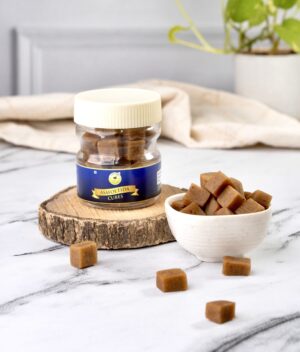
Perungayam is the Tamil name for asafoetida, the hard resin spice known as hing in Hindi. Solid block or cube perungayam, called katti perungayam, is the purest form: a dense lump you break, grate or dissolve in water before adding it to hot oil, where its sharp raw smell turns into a savoury onion-garlic note.
If you have only ever used the loose yellow powder from a supermarket tin, cube perungayam will surprise you. It does not pour. It does not scoop. It sits in the jar like a piece of amber gravel, and it smells strong enough that most South Indian kitchens keep it double wrapped. That strength is the point. This guide explains what the cube form actually is, how to use it without wasting it, and how much you need per dish.
What perungayam actually is
Asafoetida is the dried sap of a ferula plant. The sap is collected, allowed to harden and then sold either as solid lumps or ground down and mixed with other ingredients. The solid lump is the original form, and it is the form that Tamil households call katti perungayam, where katti simply means a block or a solid piece.
The same spice travels under many names across India. It is hing in Hindi and across the north, inguva in Telugu, ingu in Kannada, kayam in Malayalam and perungayam in Tamil. If a recipe from any of these kitchens asks for a pinch of hing, cube perungayam is what it originally meant.
Our asafoetida cubes (katti perungayam) in a 50g pack at Rs 189 are the solid form, not the free-flowing compounded powder. A 50g pack lasts an ordinary family a long time, because the quantity you use at a time is genuinely tiny.
Cube perungayam versus powdered hing
The yellow powder sold in most shops is compounded asafoetida. The resin is ground and blended with a carrier, usually rice flour or wheat flour, plus turmeric for colour. That blending is what makes it pour freely and makes it milder.
The cube has no carrier. It is the resin itself, so the smell hits you the moment you open the jar and the strength per gram is far higher. Cooks who switch to cubes almost always reduce the quantity they were using out of habit.
A few practical differences worth knowing before you buy:
- Texture: the cube is hard, close to a pebble. You cannot spoon it.
- Strength: a rice-grain sized piece of cube does the work of a generous pinch of powder.
- Flour content: compounded powder contains flour, so people avoiding wheat often prefer the cube.
- Shelf life: the solid form keeps its smell for a very long time in a tight jar, while powder fades faster once opened.
- Price per use: the cube looks dearer per gram and works out cheaper per dish.
How to use katti perungayam in the kitchen
Because the cube is solid, you need one extra step. There are three standard ways South Indian cooks handle it, and all three are easy.
Break and fry it in the tadka
Chip off a small piece with the back of a knife or the edge of a stone pestle. Drop it into the hot oil along with mustard seeds and curry leaves. It will sizzle, foam slightly and melt into the oil. This is the method for sambar, rasam, kootu and poriyal.
Grate or pound it to a coarse powder
Rub the cube on a small grater, or pound a few pieces in a mortar with a little salt so it does not stick. Salt gives the pestle something to work against and the result is a coarse grey powder you can keep in a separate tiny bottle for a week or two of cooking.
Dissolve it in water
Put a small piece in two spoons of water and leave it for ten minutes. It turns the water milky white. Pour that water into vatha kuzhambu, more kuzhambu, or into a batch of pickles where you want the flavour spread evenly rather than sitting in one spot. This is also the neatest way to flavour buttermilk, since nobody wants to bite into an unmelted lump.
What perungayam tastes like, and why hot oil matters
Raw, the smell is bluntly unpleasant to most people. It is sulphurous and sharp, which is exactly why it is stored in airtight glass and often inside a second container.
Hot oil changes it completely. Within a few seconds of hitting the tadka, the harsh edge burns off and what remains is a round, savoury, almost allium flavour, close to slow-cooked onion and garlic. That transformation is the entire reason the spice exists in Indian cooking.
This is also why you must never add perungayam to a finished dish off the heat and expect it to taste right. Give it oil and give it heat, even if only for five seconds.
Perungayam in Jain and Brahmin cooking
Asafoetida has a settled place in kitchens that leave out onion and garlic. Jain cooking avoids both, as do many Brahmin households across Tamil Nadu, Karnataka and Maharashtra, particularly on ritual days and during certain months.
In those kitchens perungayam supplies the savoury base note that onion and garlic would otherwise provide. A Jain dal tadka, a no-onion sambar or a plain tomato rasam leans on hing to stop the dish tasting flat. Swap it out and the gap is immediately obvious.
If you cook this way regularly, the cube is worth the extra handling step. Keeping a pack of katti perungayam cubes at Rs 189 for 50g alongside your mustard and fenugreek means you are never short of that base flavour.
Dishes that need perungayam
- Sambar: added in the tadka or dissolved into the pot just before the dal goes in.
- Rasam: arguably the dish where its absence is most noticeable.
- Vatha kuzhambu: a generous hand here, since the dish is built on tamarind and strong spice.
- Kootu and poriyal: a small chip in the oil at the start.
- Dal tadka: especially the no-onion, no-garlic version.
- Pickles: lime, mango and garlic-free pickles use dissolved perungayam water.
- Spiced buttermilk: a few drops of the dissolved water with salt, curry leaves and green chilli.
- Vadai and bonda batters: a very small quantity worked into the batter before frying.
How much to use and how to store it
Start smaller than you think. For a family-sized pot of sambar serving four, a piece the size of a grain of rice is plenty. For rasam, slightly less. For a pickle batch, a piece the size of a small pea dissolved in water.
Over-dosing is the common beginner mistake with cubes, and an over-hinged dish tastes bitter and harshly sharp rather than savoury. It cannot be corrected later, so add less and adjust next time.
For storage, keep the cubes in a thick glass bottle with a tight lid, inside a steel dabba if your masala shelf is shared. The smell migrates into tea leaves, coffee powder and biscuits very happily. Keep it dry and away from the stove steam. A dry cube keeps its punch for years.
Buying perungayam online in India
Quality in the solid form is easy enough to judge. Good cubes are hard, dry, pale amber to grey-brown, and they smell powerful through the packet. Soft, sticky or odourless pieces are not worth your money.
Farm2Home delivers across India, so you can order the cube form even if your local shop stocks only compounded powder. The pack we sell is the 50g solid asafoetida cube pack priced at Rs 189, which for most households is many months of cooking.
Perungayam FAQ
What is perungayam in English?
Perungayam is asafoetida in English. It is the hardened resin of the ferula plant, used as a pungent savoury spice. Hing is its Hindi name, inguva in Telugu, ingu in Kannada and kayam in Malayalam.
What is the difference between katti perungayam and perungayam powder?
Katti perungayam is the solid cube or block form, pure resin with nothing added. The powder is the same resin ground and mixed with rice or wheat flour and turmeric so it pours freely. The cube is much stronger per gram.
How do I break a perungayam cube?
Place the cube on a board and press down with the flat back of a heavy knife, or tap it with a stone pestle. It chips rather than crumbles. Pound the chips with a pinch of salt if you want a coarse powder.
Why does my perungayam smell so strong?
That raw sulphurous smell is normal for the pure cube form and is a sign of strength, not spoilage. It mellows into an onion-garlic savouriness within seconds of hitting hot oil, which is why it always goes into the tadka.
How much perungayam should I add to sambar?
A piece roughly the size of a grain of rice is enough for a pot serving four people. Cube asafoetida is far stronger than compounded powder, so use less than a recipe written for powder suggests.
Is cube asafoetida gluten free?
Pure solid asafoetida cubes contain no added flour, unlike most compounded powders which use wheat or rice flour as a carrier. Always check the pack label for the exact ingredient list before buying.
How long does a 50g pack last?
Since a single dish needs only a rice-grain sized piece, a 50g pack of cubes typically lasts an average household several months to a year, provided it is stored dry in a tightly closed glass bottle.