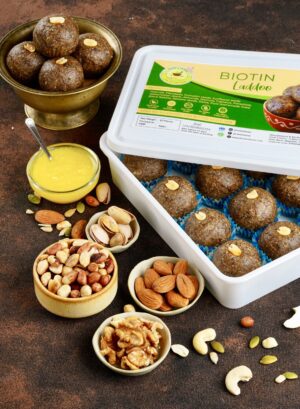
Biotin laddu is a seed and nut laddu sold as a packaged Indian sweet. Each piece is a round, hand rolled ball made from mixed seeds such as pumpkin, sunflower, flax and sesame, along with nuts, jaggery and ghee. It is firm, mildly sweet, nutty in flavour, and eaten as an everyday snack rather than a festive mithai.
If you have been searching for biotin laddu and were not sure what is actually inside the box, this page explains the sweet itself: the seeds and nuts that go into it, how it tastes, how firm each piece is, how big a piece is, when people eat it, and how to keep it at home. Farm2Home sells it as BIOTIN LADDOOS in a 15 piece pack at Rs 577.50, and delivers across India.
The name on the pack is simply the product name. It refers to the seed and nut mix the laddu is rolled from. Everything below describes it as what it is on the plate, which is food.
What goes into a biotin laddu
The base of a biotin laddu is a mix of seeds, and that mix is what gives the sweet its character. Most versions, including the one Farm2Home sells, are built around four or five seeds that are easy to find in Indian kitchens.
- Pumpkin seeds (kaddu ke beej): flat, green, slightly chewy, with a mild buttery taste when roasted.
- Sunflower seeds (surajmukhi ke beej): small and crisp, with a clean nutty flavour that carries through the whole laddu.
- Flax seeds (alsi): tiny and glossy, usually dry roasted and coarsely ground so they bind well.
- Sesame seeds (til): the traditional laddu seed in India, with the familiar warm aroma you know from til laddu and chikki.
- Melon or watermelon seeds (magaz): used in some mixes for a softer bite.
Alongside the seeds come the nuts. Almonds and cashews are the most common, often chopped rather than powdered so you get an occasional crunch. Some makers add pistachio or walnut in smaller quantity because both are strong in flavour and can take over the mix.
The binding is jaggery, either as a syrup or as grated gur worked in warm. Jaggery brings a dark, slightly smoky sweetness that suits roasted seeds far better than refined sugar does. Ghee goes in next, usually a modest amount, enough to hold the ball together and carry the aroma. Cardamom (elaichi) is the usual flavouring. A little dry coconut is sometimes added for body.
How a biotin laddoo is actually made
The method is close to any traditional Indian seed laddu, and knowing it tells you a lot about the texture you should expect.
First the seeds are dry roasted separately, because each one needs a different time on the pan. Sesame pops quickly, flax takes longer, pumpkin seeds puff slightly. Roasting them together means some are raw while others have gone bitter. Nuts are roasted after, usually at lower heat.
The jaggery is then melted down with a splash of water to a soft ball stage. This is the step that decides everything. Pull the syrup off too early and the laddu will not hold its shape. Cook it too far and the laddu sets hard like chikki. A good biotin laddoo sits between the two.
Seeds, nuts, ghee and cardamom are folded into the warm jaggery, and the mix is rolled into balls by hand while it is still warm enough to shape. Once cool, the surface firms up and the laddu holds together without a wrapper.
Taste, texture and size
The flavour is nutty and toasty first, sweet second. Jaggery keeps the sweetness lower and rounder than a besan or motichoor laddu, so if you find most Indian mithai too sweet, this one sits easier. The cardamom is noticeable but not loud.
Texture is the main difference from a soft laddu. A biotin laddu is firm and grainy rather than melting. You bite rather than scoop. Whole seeds give it a steady crunch, and the chopped nuts break that up. It is not sticky in the hand, which is why it travels well.
Each piece in the Farm2Home pack is a single serve ball, roughly the size you would hold between thumb and two fingers, so one or two pieces is a normal helping. The 15 piece pack works out to around Rs 38 or so per laddu, which is the usual range for a seed and nut laddu made with ghee and jaggery rather than sugar and vanaspati.
When Indian households eat it
This is not a festival centrepiece sweet. It belongs to the everyday corners of an Indian kitchen.
- Evening snack: with chai around five or six, instead of biscuits or namkeen.
- Lunch boxes: one laddu tucked into a school or office tiffin. It does not melt, leak or crumble in a dabba.
- Travel: train journeys and long drives, where a firm laddu survives better than barfi or peda.
- Post workout or late study snack: something small and sweet that does not need a plate.
- Gifting: a sensible addition to a Diwali or house visit hamper, particularly for people who prefer less sugary sweets.
Regional naming is worth noting if you are shopping or enquiring at a shop. In the north it is laddu or laddoo. In Tamil Nadu you will hear urundai, as in ellu urundai for sesame laddu. In Karnataka and Maharashtra, unde and ladu are both used. The sweet is the same shape everywhere.
How to store biotin laddu and how long it keeps
Store the laddus in an airtight steel or glass container at room temperature, away from the stove and away from direct sunlight. Jaggery draws moisture from the air, and a half open packet in a humid Indian kitchen will soften the laddus and dull the crunch within a few days.
Kept properly sealed, a jaggery and ghee seed laddu generally holds its texture for a few weeks. Always follow the best before date printed on the pack you receive. During the monsoon, or in coastal cities like Mumbai, Chennai and Kochi, the fridge is the safer option. Refrigerated laddus go quite hard, so leave a piece out for ten minutes before eating.
Signs it is past its best: a sour or stale smell from the ghee, a sticky damp surface, or seeds that have lost their snap. Keep a dry spoon in the container rather than reaching in with wet fingers.
How it compares with other Indian laddus
Compared with besan laddu, a biotin laddoo is far less sweet and much more textured. Besan laddu is smooth, soft and ghee heavy. This one is coarse and chewy.
Compared with til laddu or ellu urundai, it is the closest relative, since both are jaggery and seed based. The difference is variety: til laddu is sesame alone, while a biotin laddu carries four or five seeds plus nuts, which makes the flavour more layered.
Compared with dry fruit laddu, it is cheaper per piece and less dense, because dates and figs make dry fruit laddus sticky and heavy. Compared with motichoor or boondi laddu, there is no comparison in style at all. Those are syrup soaked festival sweets. This is a pantry snack.
What to check before buying
A few practical things separate a good pack from a poor one.
- Jaggery or sugar: jaggery based laddus taste deeper and less sharp. Check the ingredient list.
- Ghee or vegetable fat: ghee makes a real difference to aroma. Vanaspati tastes flat and waxy.
- Whole or powdered seeds: whole and coarsely broken seeds give the crunch most people want from this laddu.
- Piece count and weight: compare on per piece cost, not pack price alone. The Farm2Home pack states 15 pieces clearly.
- Packaging: a sealed container travels better than a loose box, especially for courier delivery across India.
You can order the 15 piece biotin laddoo pack from Farm2Home at Rs 577.50 with delivery across India, including metros and smaller towns.
Frequently asked questions about biotin laddu
What is biotin laddu made of?
It is made of mixed seeds such as pumpkin, sunflower, flax and sesame, together with nuts like almond and cashew, bound with jaggery and ghee and flavoured with cardamom. The exact mix varies slightly by maker, so read the ingredient list on the pack.
Is biotin laddu a sweet or something else?
It is a food, specifically an Indian sweet. Biotin laddu is simply the name printed on the pack, referring to the seed and nut mix it is rolled from. Think of it the way you would any laddu from a sweet shop: a small sweet eaten in a piece or two.
How many pieces come in a pack and what does it cost?
The Farm2Home pack contains 15 pieces and is priced at Rs 577.50. That is roughly Rs 38 per laddu.
How long does biotin laddoo stay fresh?
In a sealed airtight container at room temperature it holds its texture for a few weeks. Go by the best before date on the pack. In humid or monsoon weather, keep it refrigerated and bring a piece to room temperature before eating.
Is it very sweet?
Less so than most mithai. Jaggery gives a rounder, darker sweetness, and the roasted seeds and nuts balance it, so the overall taste leans nutty rather than sugary.
Can children eat it in a tiffin box?
It packs well in a dabba because it is firm, dry to the touch and does not leak. For very young children, cut a piece in half, since whole seeds and chopped nuts need proper chewing.
Does Farm2Home deliver outside the metros?
Yes. Farm2Home ships across India, and because these laddus are firm and sealed they handle courier transit better than soft or syrup based sweets.
If you have been meaning to try one, the simplest place to start is a single pack of 15 biotin laddoos and see how the texture and sweetness suit your household before ordering again.