Finding healthy snacks for kids does not mean that parents have to completely remove crunchy and tasty foods from snack time. Children naturally enjoy crispy textures, and regular potato chips are often an easy choice because they are convenient and flavorful. However, families can explore many other snack options made with fruits, vegetables, grains, millets, nuts, seeds, and traditional ingredients.
Choosing different snacks can help introduce children to a wider variety of foods while making snack time more interesting. Farm M2 Home brings traditional food ideas and convenient products together for modern families who want to explore alternatives to everyday packaged snacks.
Why Look for Alternatives to Regular Potato Chips?
Regular potato chips can be convenient, but many packaged varieties may contain significant amounts of salt, oil, and seasonings. Eating them occasionally can be part of a varied diet, but parents may prefer to offer different snack choices more often.
Instead of focusing only on removing potato chips, it can be more helpful to introduce attractive alternatives that children actually enjoy.
Crunchy snacks made from vegetables, grains, or other familiar ingredients can provide a different experience while adding variety to a child’s food routine.
1. Okra Chips
Okra chips are an interesting alternative for children who enjoy crunchy snacks.
Okra, also known as ladies’ finger, can be processed into a crispy snack through methods such as baking, dehydration, air-frying, or frying.
The final nutritional profile depends on how the chips are prepared, so parents should check the ingredient and nutrition information when buying packaged products.
For children who already enjoy crunchy snacks, okra chips can be an exciting food to try.
2. Banana Chips
Banana chips are another familiar snack option.
They can be prepared at home or purchased in packaged form. However, preparation methods vary considerably. Some banana chips may contain considerable amounts of added oil or salt.
Parents should therefore check the label and serving size.
For younger children, choose an age-appropriate texture and supervise them while eating.
3. Homemade Ragi Snacks
Ragi is a traditional grain widely used in Indian kitchens.
It can be used to prepare homemade pancakes, crackers, dosa, porridge, or other snacks.
Ragi-based snacks can provide a different texture from conventional potato chips while introducing children to a traditional grain.
Parents can keep homemade versions mildly seasoned and adjust the preparation according to the child’s age.
4. Fresh Fruit
Fresh fruit is one of the simplest alternatives to packaged chips.
Banana, apple, papaya, orange, watermelon, mango, pear, and seasonal fruits can all provide different flavours and textures.
Fruit can be served as pieces, mashed, or combined with plain yogurt depending on the child’s age.
For younger children, prepare fruit in an age-appropriate form to reduce choking risks.
5. Dry Fruits and Nuts
Dry fruits can add variety to children’s snack routines.
Dates, raisins, almonds, cashews, and other suitable foods can be offered depending on the child’s age and dietary needs.
However, whole nuts can be a choking hazard for young children. They should be prepared in an appropriate form for the child’s developmental stage.
Parents should also consider known allergies before introducing nuts.
6. Homemade Vegetable Snacks
Vegetables do not always have to be served as part of lunch or dinner.
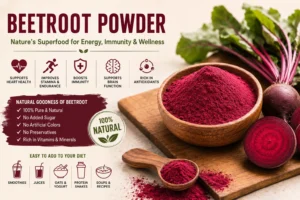
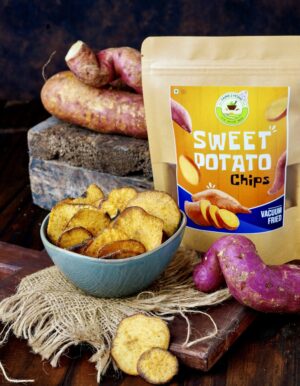
Carrot, sweet potato, beetroot, pumpkin, and other vegetables can be used in homemade snack recipes.
For example, parents can prepare baked vegetable bites, pancakes, roasted vegetables, or soft vegetable patties.
Adding familiar flavours can make vegetables more appealing to children.
7. Millet Porridge
Porridge is traditionally enjoyed as breakfast, but a suitable preparation can also work as a snack.
Millets such as ragi, little millet, or other grains can be used depending on the recipe.
A porridge mix can be convenient for busy parents.
When choosing packaged porridge mixes, check the ingredient list, added sugar, salt, and preparation instructions.
8. Homemade Idli
Mini idlis can be a soft and convenient snack for many children.
They can be prepared using traditional ingredients and served with a suitable accompaniment.
Parents can also experiment with millet-based or vegetable idlis to introduce variety.
For younger children, make sure the texture and size are appropriate for their eating ability.
9. Fruit and Yogurt
Fruit with plain yogurt can be a simple alternative to sweet packaged snacks.
Banana, mango, berries, papaya, or other suitable fruits can be mixed with yogurt.
Parents should check the label of packaged yogurt because some flavoured varieties contain added sugar.
Using plain yogurt with naturally sweet fruit can be an easy way to control added sweetness.
10. Homemade Energy Bites
Energy bites can be prepared using ingredients such as dates, oats, nuts or seeds, depending on the child’s age and dietary requirements.
They can be shaped into small soft portions and stored appropriately.
For young children, avoid hard pieces and whole nuts that may create a choking risk.
Homemade preparation also allows parents to control the ingredients and sweetness.
How to Make Healthy Snacks More Attractive
Children often respond to presentation.
Instead of simply replacing potato chips with another food, make snack time interesting.
Try:
- Cutting fruits into fun shapes
- Preparing colourful vegetable plates
- Making mini pancakes
- Serving small portions
- Combining different textures
- Letting older children help prepare simple snacks
Involving children in food preparation can also encourage them to explore new foods.
Check the Label Before Buying Packaged Snacks
Not every snack marketed as a “healthy” or “vegetable” snack is automatically a better choice.
Parents should check:
Ingredients
Look for familiar ingredients and understand what the product contains.
Added Sugar
Compare products and look for unnecessary added sugars.
Salt
Check sodium or salt content, especially when children consume several packaged foods during the day.
Oil and Fat
Check the type and amount of fat used.
Serving Size
A small-looking snack may contain multiple servings.
Allergens
Check for ingredients such as nuts, milk, wheat, soy, or other allergens if relevant to your child.
Can Kids Still Eat Potato Chips?
There is no need to think of foods as simply “good” or “bad.”
Regular potato chips can be an occasional snack for many children, depending on their overall diet and individual nutritional needs. The goal can instead be to create variety and avoid making highly processed snacks the default choice every day.
Offering alternatives gives children more opportunities to experience different flavours and ingredients.
Safety Tips for Kids’ Snacks
Food texture and preparation are particularly important for young children.
Avoid giving young children whole nuts, hard chunks, popcorn, whole grapes, or other foods that may present choking risks.
Prepare food according to the child’s age and developmental stage.
Always supervise young children while eating.
If your child has allergies, food intolerances, or specific dietary requirements, choose ingredients accordingly and seek professional guidance when needed.
Farm M2 Home: Traditional Choices for Modern Families
Farm M2 Home focuses on traditional food products and convenient ingredients for everyday family life.
From millet-based foods and porridge mixes to natural ingredients and vegetable-based snacks, there are many ways to introduce variety into children’s food routines.
Instead of depending on the same packaged snack every day, families can explore different traditional and homemade options.
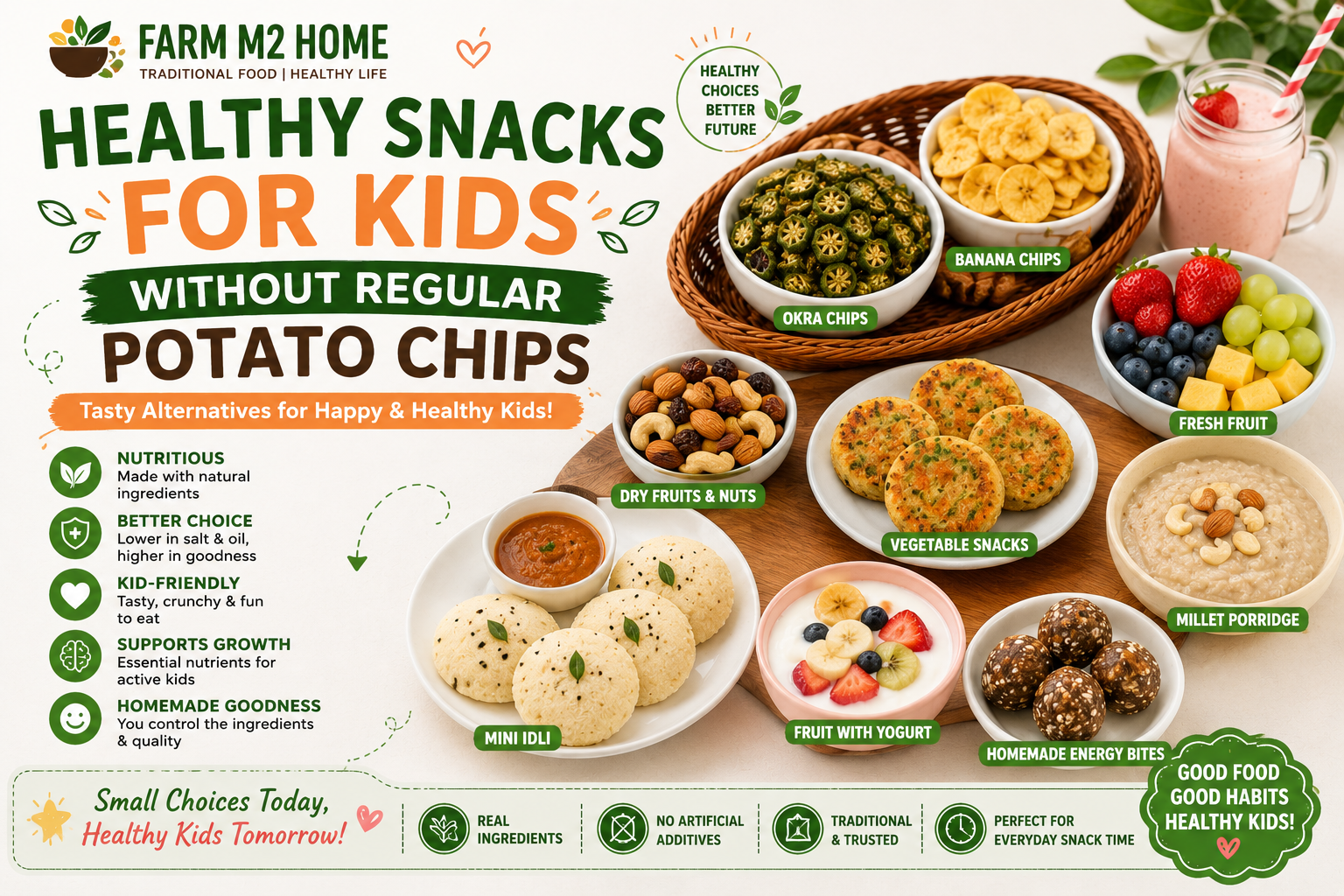
Choosing healthy snacks for kids without relying on regular potato chips can be simple and enjoyable. Okra chips, banana chips, fresh fruits, suitable dry fruits, millet snacks, homemade vegetable foods, porridge, mini idlis, fruit with yogurt, and homemade energy bites are just a few possibilities.
The best snack depends on the child’s age, eating ability, dietary needs, allergies, and overall meal pattern.
Rather than completely focusing on eliminating one particular food, parents can build a varied snack routine that includes different ingredients and textures.
With thoughtful choices and simple preparation, snack time can become an opportunity to introduce children to nutritious and traditional foods while still keeping food enjoyable and delicious. Farm M2 Home makes it easier for modern families to explore traditional food choices in convenient ways.