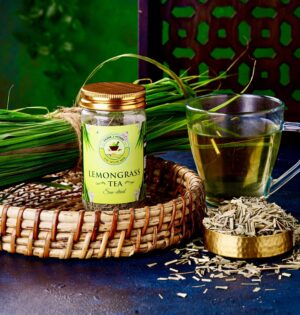
Lemon grass tea is a caffeine-free herbal brew made by steeping dried lemon grass leaf in hot water for four to six minutes. It pours a pale gold colour and tastes brightly lemony without any sourness, since the leaf carries citrus aroma but almost no acid. Indians drink it hot after dinner or iced through summer.
If you have ever walked past a clump of tall grass in a Tamil Nadu backyard and caught a sharp lemon smell, that was elumichai pullu, also called karpoora pullu in many homes. In Hindi it is nimbu ghas. The same plant is sold dried and cut as tea, and Farm2Home stocks lemon grass tea in a 25g pack at Rs 220.50 with delivery across India. This guide covers what the brew actually tastes like, how long to steep it, how to serve it hot and iced, and how to keep the dried leaf from going flat in Indian humidity.
What lemon grass tea tastes like
The dominant note is lemon zest rather than lemon juice. You get the rind, the peel oil, the top of the smell, and none of the pucker that comes from a squeeze of lime. That is the part most first-time drinkers find surprising.
Underneath the citrus there is a clean grassy base, a little like the smell of fresh hay or green bamboo. Some batches carry a faint gingery warmth at the back of the throat. The cup finishes dry and clear, with no coating on the tongue and no bitterness if you have not overbrewed it.
Because there is no tannin worth speaking of, the drink does not turn harsh the way black tea does when it sits. A pot you forgot about for twenty minutes will be stronger and a bit woody, but still drinkable.
The colour of the brew
A correctly steeped cup is pale straw to light gold, roughly the shade of weak sugarcane juice. If your cup comes out almost colourless, either the leaf is old or you used too little. If it goes deep amber and murky, you have steeped it well past the point where the citrus oils dominate, and the grassy base has taken over.
Glass cups are worth using here. Half the pleasure of this drink is watching that clear yellow build up, and it is a nice thing to put in front of guests who were expecting the usual milky chai.
How to make lemon grass tea properly
The method is simple, and the only two variables that matter are water temperature and time. Use water just off the boil, around 90 to 95 degrees. Rolling boiling water poured straight onto the leaf drives off some of the aroma before you ever get it into the cup.
- Measure about one teaspoon of dried cut lemon grass per 200ml cup.
- Pour hot water over the leaf, do not add leaf to a pan of boiling water.
- Cover the cup or pot. The aroma is volatile and escapes with the steam.
- Steep four to six minutes. Four for a light, fragrant cup; six for a fuller one.
- Strain and drink. Leaving the leaf in keeps pushing the flavour grassy.
If you prefer the Indian stovetop habit, you can simmer it instead. Bring 250ml water to a boil, switch off the flame, add the leaf, and keep the lid on for five minutes. Simmering with the flame on for several minutes gives a stronger, more vegetal cup that some people like with a slice of ginger added.
Hot, and how to sweeten it
Plain and unsweetened is how most people settle after a few weeks, because the citrus reads as sweeter than it is. Still, a quarter teaspoon of sugar or a small spoon of honey lifts the lemon note noticeably. Add honey after the cup has cooled for a minute rather than into water straight off the stove.
Jaggery works too and is common in South Indian kitchens, though it pushes the drink darker and adds a molasses edge that competes with the citrus. Palm sugar is gentler if you have it.
Iced lemon grass tea
This is where the leaf really earns its keep in Indian weather. Brew it at double strength, two teaspoons per cup, steep six minutes, strain, and let it come to room temperature before refrigerating. Pour over ice and the dilution lands it back at normal strength.
A wedge of lime, two mint leaves, and a pinch of black salt turns it into something you can serve at a summer lunch instead of a cold drink. It keeps three days in a covered glass bottle in the fridge, after which the aroma starts to fade.
With milk, or not
Short answer: generally not. Milk mutes the citrus and the result tastes like warm milk with a vague green note. If you want to try it, use a splash rather than the usual half-and-half chai ratio, and sweeten a little more than you would otherwise.
Where it does work is in a blend. A pinch of lemon grass added to a regular milk tea alongside cardamom and ginger gives the pot a lemony lift without taking it over. That is a reasonable way to use up the last dust at the bottom of a pack.
Lemon grass tea as an evening chai replacement
Most Indian households run on two or three cups of milky chai a day, and the 6pm cup is the one people most often want to swap. Lemon grass tea fits that slot well because it is caffeine-free, needs no milk, and takes five minutes with nothing more than a kettle and a strainer.
It also works after a heavy meal, when another cup of strong chai feels like too much. A small clear cup of it after biryani or a festival lunch is a common habit in Kerala and Tamil Nadu homes.
During the monsoon, when the kitchen is damp and everything smells of wet earth, the sharp citrus steam off a fresh pot is genuinely welcome. A pack of dried lemon grass tea leaf from Farm2Home sits in the cupboard and keeps for months, which makes it easier to maintain than anything that needs fresh produce.
How to store the dried leaf
Dried lemon grass is all aroma, and aroma is what you lose first. Three things take it away: air, light, and moisture. Indian kitchens, especially coastal ones, supply plenty of the third.
- Transfer the leaf to an airtight glass or steel jar as soon as you open the pack.
- Keep the jar in a dark cupboard, not on an open shelf above the stove.
- Use a dry spoon every time. One damp spoon can clump a whole jar.
- Do not refrigerate it. Condensation each time you open the jar does more harm than room temperature storage.
Stored this way, a 25g pack holds its character for six to eight months. The test is simple: rub a pinch between your fingers and smell it. Strong lemon means it is fine. Faint and hay-like means it will still make a cup, but a dull one, and it is better used in a milk tea blend than brewed on its own.
Buying lemon grass tea in India
Look for cut leaf with visible pale green and straw colouring, not a uniform brown powder. Powder loses aroma far faster and tends to slip through a normal tea strainer. A good pack smells of lemon the moment you open it, before any water touches it.
A 25g pack sounds small but gives you roughly twenty-five to thirty cups at a teaspoon each, which is a month of daily evening cups for one person. At Rs 220.50 that works out to a few rupees a cup, cheaper than most packaged cold drinks and comparable to good loose black tea. You can order the 25g lemon grass tea pack for delivery anywhere in India.
Frequently asked questions
How long should I steep lemon grass tea?
Four to six minutes in water just off the boil, with the cup covered. Four minutes gives a light, very fragrant cup. Six gives a fuller, slightly grassier one. Past about ten minutes the citrus aroma thins out and the green, hay-like notes dominate.
Does lemon grass tea contain caffeine?
No. It is a herbal infusion made from the leaf of the lemon grass plant, not from the tea plant, so it contains no caffeine at all. That is why many Indian households use it for the late evening cup in place of milky chai.
Is lemon grass tea sour like lemon?
No. It smells and tastes strongly of lemon peel but has almost no acidity, so there is no sourness or pucker. If you want tartness you have to add a squeeze of lime yourself, which many people do in the iced version.
What is lemon grass called in Indian languages?
In Tamil it is elumichai pullu, also widely called karpoora pullu. In Hindi it is nimbu ghas. In Malayalam it is inchippullu and in Kannada majjige hullu. All refer to the same tall aromatic grass used for this tea.
Can I reuse the leaf for a second cup?
You can, but the second steep is noticeably weaker. Give it eight to ten minutes instead of five and expect a paler, flatter cup. Most people get better value by using a slightly smaller first measure rather than trying to stretch a used one.
How much lemon grass tea does a 25g pack make?
About twenty-five to thirty cups at one teaspoon per 200ml cup, or roughly twelve to fifteen cups if you brew it at double strength for iced tea. For a single daily drinker that is around a month from one pack.
Can I use fresh lemon grass stalks instead of dried leaf?
Yes, if you can get them. Bruise two stalks, slice them, and simmer for seven to eight minutes, since fresh stalk releases its aroma more slowly than cut dried leaf. The cup comes out rounder and a little sweeter, but fresh stalk keeps only about a week in the fridge.