When choosing a sweetener for tea, coffee, desserts, or traditional recipes, many people compare coconut sugar vs jaggery vs brown sugar. While all three add sweetness, they differ in their source, flavour, appearance, texture, and common culinary uses.
Understanding these differences can help you choose the right sweetener for your recipe and personal taste. Whether you’re preparing traditional South Indian dishes or experimenting with modern desserts, Farm M2 Home brings traditional sweetening options that fit today’s kitchens.
What Is Coconut Sugar?
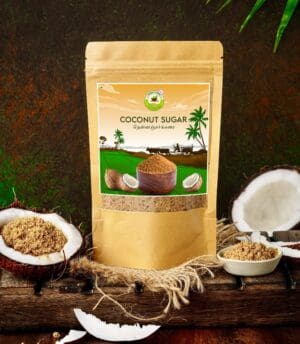
Coconut sugar is made from the sap of coconut palm flower buds. The sap is gently heated until the moisture evaporates, leaving behind brown granules with a mild caramel-like flavour.
Unlike coconut milk or coconut oil, coconut sugar is used primarily as a sweetener. Its rich colour and subtle taste make it popular in beverages, porridges, and baked recipes.
What Is Jaggery?
Jaggery is a traditional sweetener commonly made from sugarcane juice or palm sap. Instead of being refined into white crystals, the juice is concentrated and solidified into blocks, powder, or small pieces.
In India, jaggery has been used for generations in sweets, beverages, and festive recipes. Palm jaggery (Karupatti) and sugarcane jaggery each have slightly different flavours and colours.
What Is Brown Sugar?
Brown sugar is generally refined white sugar with molasses added back, although some varieties retain natural molasses during processing.
It has a soft texture, moist crystals, and a mild caramel flavour. Brown sugar is widely used in baking because it contributes colour, moisture, and a deeper sweetness to cookies, cakes, and sauces.
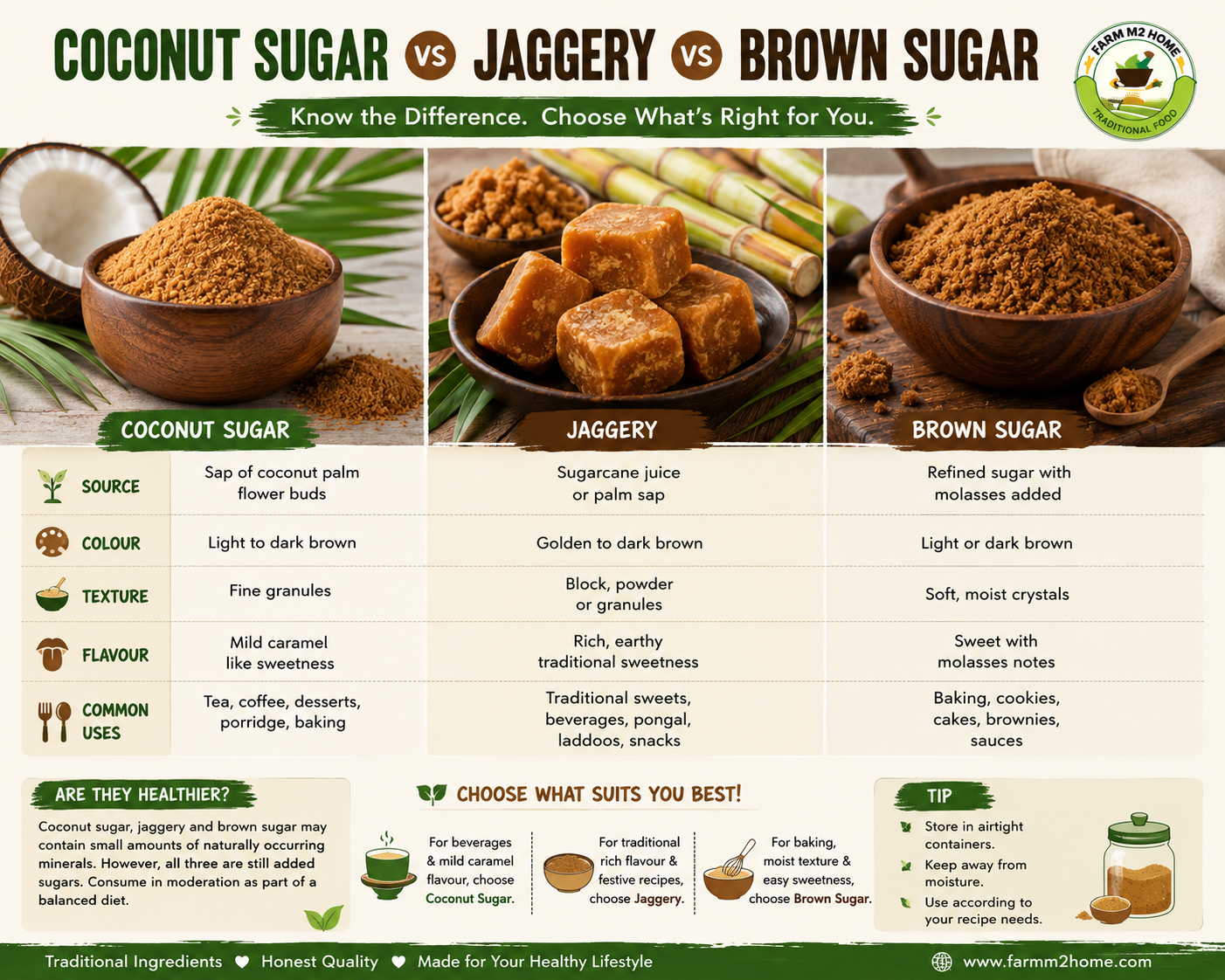
Coconut Sugar vs Jaggery vs Brown Sugar: Quick Comparison
| Feature | Coconut Sugar | Jaggery | Brown Sugar |
|---|---|---|---|
| Source | Coconut palm sap | Sugarcane or palm sap | Refined sugar with molasses |
| Colour | Light to dark brown | Golden to dark brown | Light or dark brown |
| Texture | Granulated | Block, powder, or granules | Soft crystals |
| Flavour | Mild caramel | Rich, earthy sweetness | Sweet with molasses notes |
| Common Uses | Tea, coffee, desserts | Traditional sweets, drinks | Baking and desserts |
Difference in Taste
The biggest difference between these sweeteners is their flavour.
Coconut Sugar
Coconut sugar has a gentle caramel-like taste that blends well with tea, coffee, and desserts without overpowering other ingredients.
Jaggery
Jaggery has a stronger, richer flavour that works particularly well in traditional Indian recipes such as pongal, laddoos, payasam, and sweet snacks.
Brown Sugar
Brown sugar offers a familiar sweetness with light molasses notes, making it a favourite for baking.
Difference in Texture
Texture also affects how each sweetener behaves in recipes.
- Coconut Sugar: Dry granules that mix easily into hot drinks.
- Jaggery: Often available as blocks or powder and may need to be grated or dissolved.
- Brown Sugar: Soft and moist, making it ideal for cookie dough and cake batter.
Choosing the right texture depends on how you plan to use the sweetener.
Which Sweetener Works Best in Tea and Coffee?
If you’re looking for everyday beverage options, each sweetener creates a different experience.
Coconut Sugar in Tea
Its caramel flavour pairs well with ginger tea, cardamom tea, and black tea.
Coconut Sugar in Coffee
The roasted coffee flavour complements coconut sugar’s subtle richness.
Jaggery in Tea
Jaggery works well in traditional Indian-style tea and herbal drinks.
Brown Sugar in Coffee
Brown sugar dissolves easily and adds a familiar sweetness with a slight molasses character.
Which Sweetener Is Better for Desserts?
The answer depends on the recipe.
Coconut Sugar
Suitable for:
- Cookies
- Cakes
- Porridge
- Pancakes
- Homemade energy bites
Jaggery
Ideal for:
- Payasam
- Laddoos
- Sweet pongal
- Traditional Indian desserts
Brown Sugar
Perfect for:
- Brownies
- Cookies
- Muffins
- Cakes
- Dessert sauces
Each sweetener contributes its own colour and flavour, so the final recipe may look and taste different.
Are They Healthier Than White Sugar?
This is one of the most common questions.
Although coconut sugar and jaggery are often viewed as more traditional or less refined than white sugar, all three are still added sugars.
Some may contain small amounts of naturally occurring minerals, but they should not be treated as health foods or consumed without moderation.
The most important factor is your overall diet and total added sugar intake.
How to Choose the Right Sweetener
Choose Coconut Sugar If You Want:
- A mild caramel flavour
- Granulated sweetness
- Tea and coffee compatibility
- A brown-coloured sweetener
Choose Jaggery If You Want:
- Traditional Indian flavour
- Rich sweetness
- Festive recipes
- Classic homemade sweets
Choose Brown Sugar If You Want:
- Soft baking-friendly texture
- Moist cookies and cakes
- Mild molasses flavour
- Easy baking performance
Tips for Using These Sweeteners
- Start with a small amount and adjust sweetness gradually.
- Read the ingredient label before purchasing.
- Store sweeteners in airtight containers.
- Keep them away from moisture.
- Follow recipe recommendations for the best results.
- Remember that different sweeteners can change the colour and flavour of the final dish.
Why Choose Farm M2 Home?
Farm M2 Home brings traditional food ingredients into modern kitchens. Whether you’re exploring coconut sugar for everyday beverages or traditional sweetening options for homemade recipes, choosing quality ingredients can make cooking more enjoyable.
From breakfast dishes to desserts and traditional family recipes, Farm M2 Home helps make familiar flavours part of everyday life.
The comparison of Coconut Sugar vs Jaggery vs Brown Sugar shows that each sweetener has its own unique character. Coconut sugar offers a gentle caramel flavour, jaggery brings traditional richness, and brown sugar provides a baking-friendly sweetness.
Rather than asking which one is universally “better,” it’s more helpful to choose the sweetener that suits your recipe, taste preference, and cooking style. Whatever you choose, using added sugars in moderation remains an important part of a balanced eating routine.
With Farm M2 Home, you can explore traditional sweetening ingredients that bring authentic flavour and convenience to your everyday kitchen.