
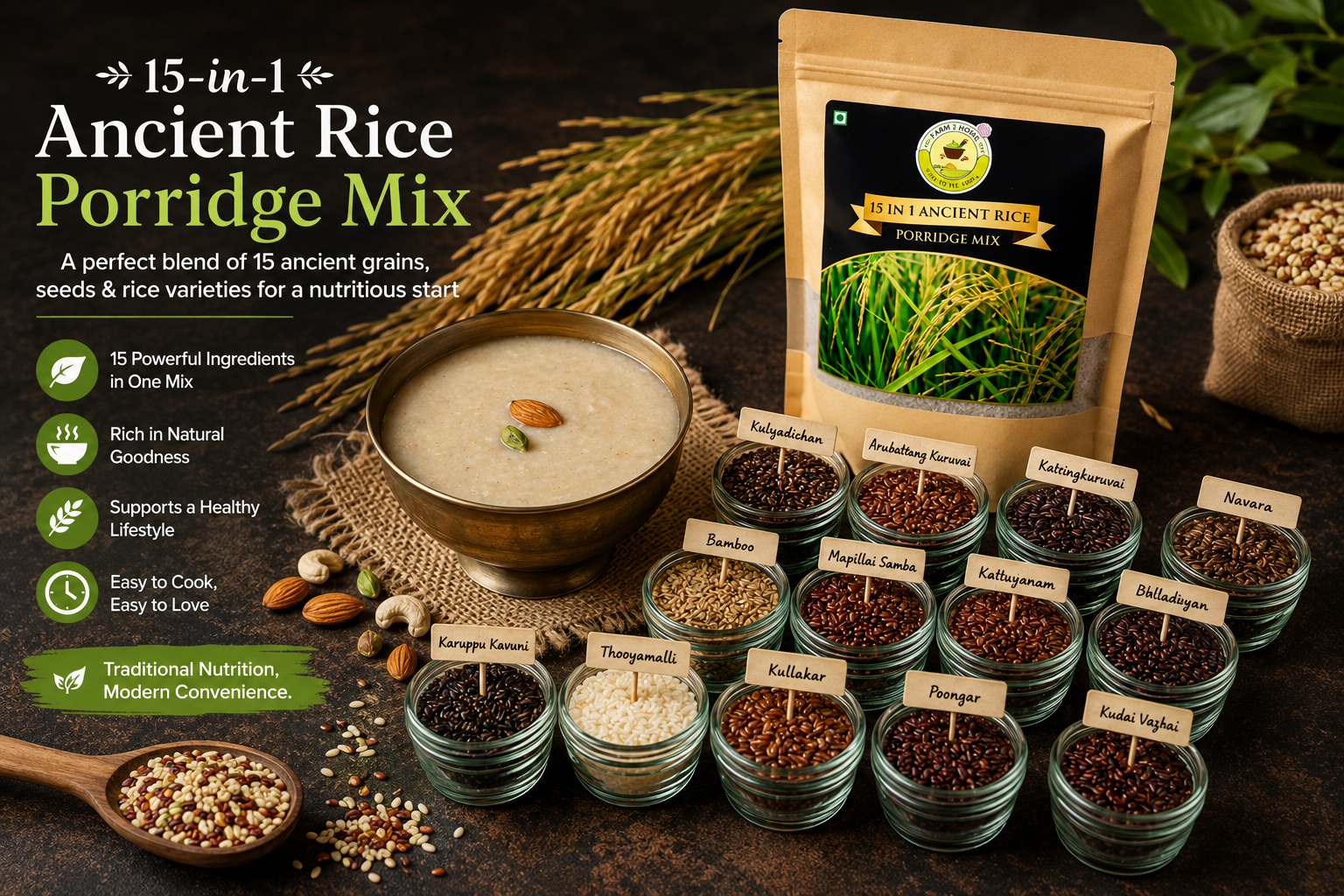
Tamil cuisine has a rich tradition of preparing simple, nourishing foods using grains, rice varieties, pulses, and other natural ingredients. Among these traditional foods, Paarambariya Arisi Kanji Maavu holds a special place. It is a traditional rice-based porridge flour that can be used to prepare a warm and comforting breakfast or light meal.
In today’s busy lifestyle, many families are looking for convenient ways to include traditional foods in their daily routine. A ready-to-use Paarambariya Arisi Kanji Maavu can make traditional porridge preparation easier while retaining the familiar taste and simplicity of Tamil food culture.
Farm M2 Home brings traditional food products to modern kitchens, making it easier for families to explore classic ingredients and recipes.
What Is Paarambariya Arisi Kanji Maavu?
“Paarambariya Arisi Kanji Maavu” refers to a traditional rice-based flour used to prepare kanji, or porridge. Depending on the recipe, the flour may be prepared using traditional rice varieties and other complementary grains or ingredients.
Kanji has traditionally been valued because it is simple to prepare, easy to customize, and suitable for different meal preferences. It can be prepared as either a savory or mildly sweet dish.
The texture of the finished kanji depends on the quantity of flour, liquid, and cooking time used.
Why Is Traditional Rice Important?
Rice has been an essential part of Tamil food culture for generations. Traditional rice varieties are often appreciated for their distinctive color, aroma, texture, and culinary characteristics.
Using traditional rice-based ingredients in everyday meals also allows families to stay connected with regional food traditions.
Rather than treating traditional rice only as a special-occasion ingredient, kanji provides a simple way to include it in regular meals.
What Makes Kanji a Popular Breakfast?
A warm bowl of kanji can be a comforting way to begin the day. It requires relatively simple preparation and can be adjusted according to individual preferences.
Some people prefer savory kanji with salt and spices, while others enjoy a sweeter version with milk or other ingredients.
Because of its versatility, kanji can be adapted to suit different tastes and meal routines.
How to Prepare Paarambariya Arisi Kanji
Preparing rice kanji is generally straightforward.
Step 1: Measure the Flour
Take the recommended quantity of Paarambariya Arisi Kanji Maavu according to the product instructions.
Step 2: Mix with Liquid
Mix the flour with a small amount of water first to create a smooth mixture without lumps.
Step 3: Cook
Add the mixture to a pan and cook over medium heat while stirring continuously.
Step 4: Adjust the Consistency
Add more water according to whether you prefer a thin or thick kanji.
Step 5: Add Ingredients
For savory kanji, add salt and suitable spices. For a sweeter preparation, you can use ingredients according to your dietary preference.
Always follow the preparation instructions provided on the Farm M2 Home product packaging.
Savory Kanji Recipe
A simple savory kanji can be prepared using the flour, water, and salt.
For additional flavor, you can add:
- Cumin
- Pepper
- Curry leaves
- Vegetables
- Buttermilk, if suitable for your recipe
This creates a simple traditional-style breakfast.
Sweet Kanji Recipe
For people who prefer a sweeter breakfast, kanji can be prepared with milk or water and a suitable natural sweetener.
You can also add:
- Banana
- Dates
- Nuts
- Cardamom
- A small amount of jaggery, according to preference
The result is a comforting sweet porridge suitable for breakfast or an evening meal.
Nutritional Value
The nutritional value of Paarambariya Arisi Kanji Maavu depends on the specific rice variety and ingredients used in the product.
Rice-based foods generally provide carbohydrates, which are an important source of energy. If the mix contains additional grains, pulses, seeds, or other ingredients, it may provide additional nutrients.
For accurate information about calories, carbohydrates, protein, fat, fiber, vitamins, and minerals, consumers should check the nutritional information on the product label.
Why Choose Farm M2 Home?
Farm M2 Home focuses on traditional food products designed for modern households. Paarambariya Arisi Kanji Maavu offers a convenient way to prepare a familiar traditional-style meal without having to process and grind ingredients separately at home.
It can be a useful pantry option for families who enjoy traditional Tamil recipes but have limited time for lengthy food preparation.
When Can You Enjoy Rice Kanji?
Although kanji is commonly associated with breakfast, it can also be enjoyed at different times of the day.
Breakfast
A warm bowl of kanji can be prepared as a simple morning meal.
Evening
A lighter portion can be enjoyed as an evening food option.
Light Meal
Depending on the ingredients and portion size, kanji can also be prepared as a simple light meal.
Storage Tips
To maintain the quality of the flour:
- Store it in a cool and dry place.
- Keep the package tightly sealed after opening.
- Protect it from moisture.
- Use a clean and dry spoon.
- Follow the storage instructions on the product label.
Proper storage helps preserve the freshness and quality of the flour.
Paarambariya Arisi Kanji Maavu is a simple way to bring the traditional taste of Tamil rice-based porridge into modern kitchens. Its easy preparation, versatile recipes, and comforting texture make it suitable for breakfast and other light meals.
Whether you prefer savory kanji with spices or a mildly sweet version with milk and traditional ingredients, there are many ways to prepare it according to your taste.
Farm M2 Home brings traditional food products to modern households, helping families enjoy the flavors and food traditions that have been part of Tamil cuisine for generations.


