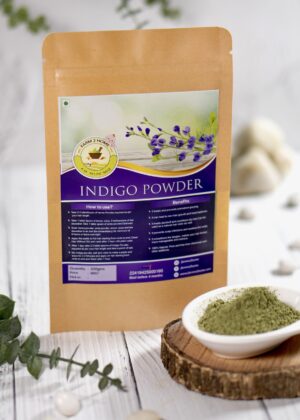
Natural hair-care traditions have used plant-based ingredients for generations. Among these, Indigo Powder, also known as Avuri Powder, is widely used as a natural hair-colouring ingredient. Made from the leaves of the indigo plant, this fine powder is particularly popular among people who want to explore plant-based alternatives for achieving darker-looking hair.
Indigo Powder is often used along with henna because the two ingredients can work together to create different shades, ranging from brown to deeper dark tones. However, the final result depends on your natural hair colour, amount of grey hair, preparation method, application time, and previous hair treatments.
Farm M2 Home brings traditional ingredients into modern hair-care routines, making it easier to explore familiar plant-based practices at home.
What Is Indigo Powder for Hair?
Indigo Powder is made from dried leaves of the indigo plant, commonly associated with Indigofera tinctoria. The leaves are processed and finely ground into a greenish powder.
Although indigo is famous historically as a natural textile dye, it is also traditionally used for hair colouring. When prepared and applied correctly, it can contribute darker-looking shades to the hair.
Indigo Powder itself is not the same as conventional synthetic hair dye. Because it is a plant-based powder, the colour outcome can vary from person to person.
Can Indigo Powder Make Hair Look Darker?
Yes, Indigo Powder is traditionally used to create darker-looking hair. However, the result depends on several factors.
Your natural hair colour, grey-hair percentage, previous chemical colouring, and whether you use henna before indigo can all affect the final shade.
For this reason, it is best to perform a strand test before applying the mixture to your entire head.
Indigo Powder and Henna: Why Are They Used Together?
Henna and indigo are two different plant-based colouring ingredients.
Henna generally produces warm tones such as orange, copper, and reddish brown. Indigo can contribute deeper blue, brown, or dark tones.
When used in a suitable sequence, henna and indigo can help create a darker-looking result than henna alone.
A traditional two-step approach usually involves applying henna first and indigo afterward. The exact process should follow the instructions provided with the product.
How to Prepare Indigo Powder
Preparation is an important part of the application process.
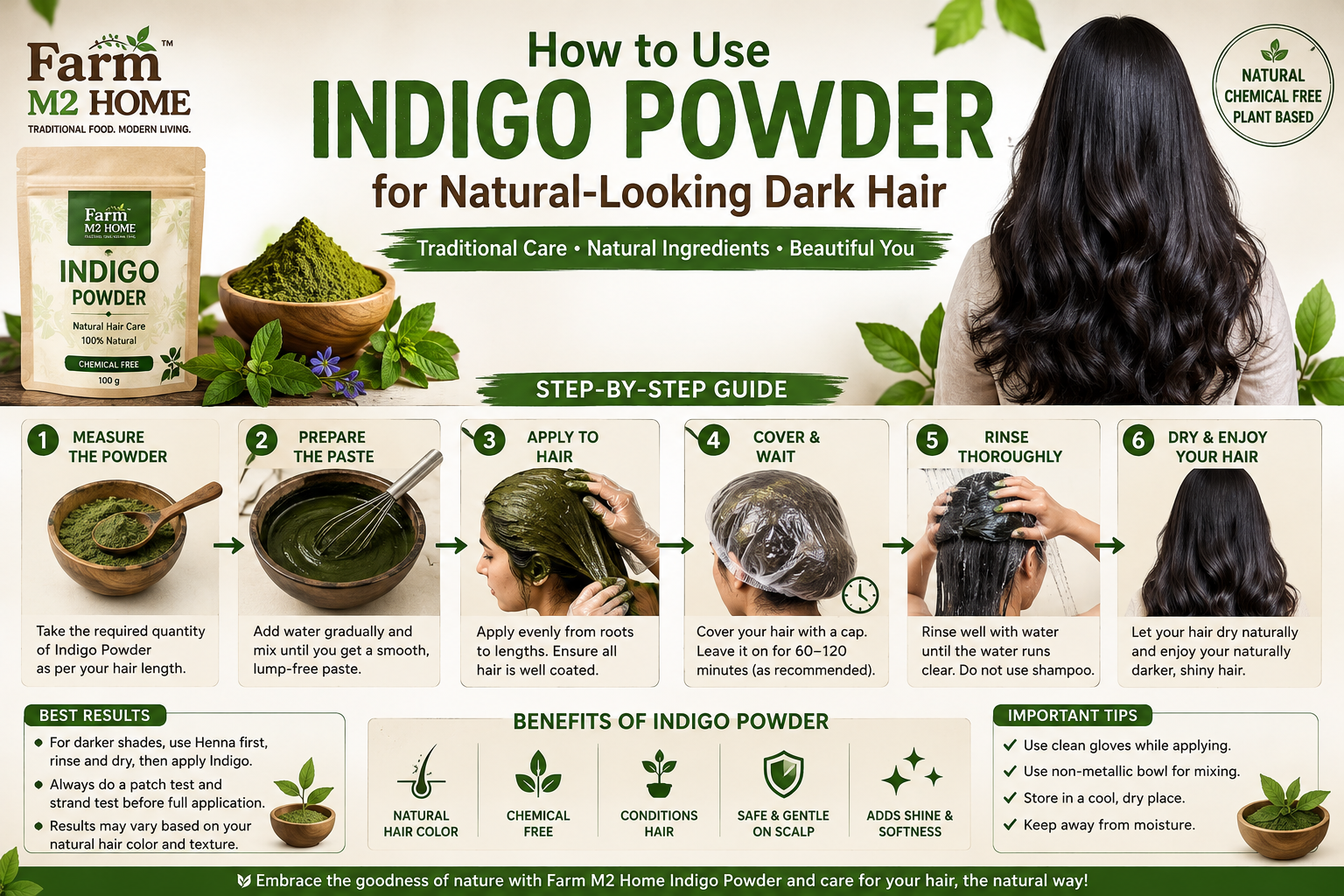
Step 1: Measure the Powder
Take the recommended quantity of Indigo Powder based on your hair length and thickness.
For your first application, follow the quantity suggested on the product packaging rather than guessing.
Step 2: Add Water
Place the powder in a clean bowl and gradually add suitable drinking water.
Mix until you obtain a smooth paste without large lumps.
Step 3: Prepare Fresh
Indigo paste is generally prepared close to the time of application. Follow the product instructions regarding preparation and waiting time.
Do not automatically follow the same preparation method used for henna because the two powders behave differently.
How to Apply Indigo Powder to Hair
Once the paste is ready, application can begin.
1. Prepare Your Hair
Clean hair is generally easier to work with. Remove excessive oil, dirt, and styling products according to your normal hair-washing routine.
2. Divide the Hair
Separate your hair into manageable sections. This helps ensure that the paste is distributed evenly.
3. Apply the Paste
Apply the Indigo Powder paste carefully from the roots toward the lengths.
Make sure the hair is adequately coated without unnecessarily applying large amounts.
4. Cover the Hair
Once application is complete, cover the hair using a suitable hair cap if recommended.
This can help prevent the paste from drying too quickly and reduce mess during the processing period.
5. Follow the Recommended Time
Leave the paste on your hair for the duration recommended on the product instructions.
Processing time can influence the final colour, so avoid keeping it on significantly longer simply to obtain a darker shade.
6. Rinse Thoroughly
Rinse your hair thoroughly with water according to the product directions.
Avoid aggressive rubbing of the scalp or hair while washing.
How to Get a Natural-Looking Dark Shade
If you want a natural-looking darker appearance, preparation and consistency are important.
A two-step henna-and-indigo method is traditionally used by many people seeking darker shades. Henna can provide a warm base, while indigo can contribute deeper tones.
However, the result will not be identical for everyone.
For example:
- Black hair may show a subtle change.
- Brown hair may develop deeper tones.
- Grey hair may show more noticeable colour.
- Previously coloured hair may react differently.
This is why a strand test is highly recommended.
Can Indigo Powder Be Used on Grey Hair?
Indigo Powder is traditionally used as part of hair-colouring routines for grey hair.
However, applying indigo alone may not always produce the desired dark result. Many traditional routines use henna first and indigo afterward.
The amount of grey hair and the original hair colour can significantly influence the result.
If you have a high percentage of grey hair, test a small section first before applying the product to your entire head.
How Often Can You Use Indigo Powder?
There is no single schedule that works for everyone.
Frequency can depend on how quickly your hair colour fades, your hair condition, and the product’s instructions.
Rather than applying it unnecessarily often, follow the manufacturer’s recommended usage and observe how your hair responds.
Important Safety Tips
Even plant-based ingredients can cause irritation or allergic reactions in some individuals.
Before using Indigo Powder:
- Perform a patch test according to the product instructions.
- Perform a strand test before full application.
- Wear gloves during preparation and application.
- Protect your clothes and surrounding surfaces from stains.
- Avoid applying it to irritated or damaged skin.
- Check the ingredient list carefully.
- Stop using it if you experience irritation or an unusual reaction.
If you have a known allergy or sensitive scalp, consult an appropriate professional before use.
What About Chemically Treated Hair?
If your hair has recently been chemically straightened, permed, bleached, or coloured, the result from plant-based powders may be unpredictable.
It is particularly important to perform a strand test before applying Indigo Powder to chemically treated hair.
If you are unsure how the product may interact with previous treatments, professional advice is recommended.
How to Store Indigo Powder
Keep the powder in a cool, dry place away from moisture and direct sunlight.
Close the package securely after every use.
Use a clean, completely dry spoon when taking out the powder.
Always check the Farm M2 Home product packaging for specific storage instructions and the best-before date.
Why Choose Farm M2 Home Indigo Powder?
Farm M2 Home focuses on bringing traditional ingredients into convenient modern routines.
Indigo Powder provides an opportunity to explore a traditional plant-based approach to hair colouring. With proper preparation, careful application, and realistic expectations, it can be incorporated into a natural-looking hair-care routine.
Indigo Powder for hair is a traditional plant-based colouring ingredient that can help create darker-looking hair when used appropriately. It is often combined with henna to achieve deeper brown or dark shades.
The final result depends on your natural hair colour, grey-hair percentage, previous treatments, preparation, and application time. Therefore, a strand test is one of the most important steps before full application.
With careful preparation and proper use, Indigo Powder can be an interesting way to explore traditional hair-colouring practices with Farm M2 Home.