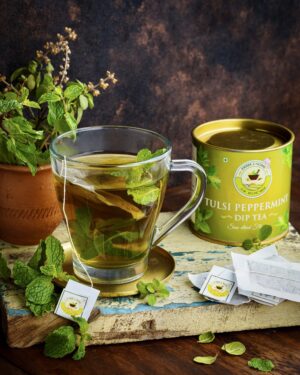
Peppermint tea is a caffeine-free herbal infusion made by steeping the dried or fresh leaves of the peppermint plant (Mentha piperita) in hot water. It is not made from tea leaves at all, so it contains no tea. The brew is pale gold to light green, with a cooling menthol aroma and a clean, sharp finish.
If you have been searching for peppermint tea in India, you have probably run into two kinds of confusion. The first is what peppermint actually is, because the mint sold in most Indian vegetable markets is not the same plant. The second is how to brew it so it tastes clean instead of bitter or soapy. This guide covers both, plus what to look for when you buy.
Peppermint tea versus pudina: the difference that matters
This is the single most common mix-up, and it is worth getting right before you buy anything. The green mint bunch you pick up for chutney, raita or pudina pani is almost always spearmint, known botanically as Mentha spicata. Peppermint is a different plant, Mentha piperita, a natural hybrid of watermint and spearmint.
The practical difference is menthol. Peppermint carries a much higher level of it, which is why the aroma hits you sharply and the finish feels cold on the tongue. Spearmint, our everyday pudina, is softer, sweeter and grassier, with a rounded flavour that works beautifully in cooking but tastes comparatively flat as a standalone brew.
So if you steep a handful of market pudina expecting peppermint tea, the result will be pleasant but thin. It will not have that bracing, cooling character. Peppermint leaf is grown and dried specifically for infusion, and the leaf is selected for oil content rather than for size or tenderness.
- Peppermint (Mentha piperita): high menthol, sharp cooling aroma, slightly peppery, dark green leaf with purple-tinged stems.
- Pudina or spearmint (Mentha spicata): mild, sweet, grassy, the mint of Indian kitchens and street drinks.
- In a cup: peppermint gives a crisp single-note brew; spearmint gives something gentler and herbier.
What peppermint tea tastes like
Expect a clean, cooling flavour with a faint sweetness and no bitterness when it is brewed correctly. The aroma arrives before the taste, menthol-forward and almost minty-cold even when the cup is steaming. There is a slight peppery edge at the back, which is where the name comes from.
The liquor is light. It has none of the tannic grip of black tea and none of the vegetal weight of green tea. That is because there are no tea leaves in it. Anyone used to strong Indian chai will find it unusually delicate on the first try, which is exactly why brewing technique changes the experience so much.
Bitterness in peppermint tea is almost always a brewing fault rather than a leaf fault. Water that is too hot, or a steep that runs far too long, pulls harsh notes out of the leaf and flattens the cooling aroma.
How to brew peppermint tea properly
Peppermint is forgiving compared with green tea but it still rewards attention. Here is the method that works consistently in Indian kitchens, where tap water is often hard and the default instinct is to boil everything hard.
Loose leaf method
- Use roughly one teaspoon of dried peppermint leaf per 200 ml cup. Increase slightly if the leaf is very coarse.
- Heat water to just off the boil, around 90 to 95 degrees Celsius. Let a rolling boil sit for thirty seconds before pouring.
- Pour over the leaf and cover the cup or pot. Covering keeps the menthol aroma in the brew instead of letting it escape as steam.
- Steep for five to seven minutes. Peppermint needs longer than green tea because the flavour sits in the leaf oils.
- Strain and drink. Add a little honey or a squeeze of lime if you prefer, though many people drink it plain.
Our Peppermint Leaf Tea in a 25g pack at ₹208.95 is loose dried leaf, which gives you full control over strength and lets you see exactly what you are brewing. Loose leaf also opens up blending, so you can combine it with your own tulsi, lemongrass or a few cardamom pods.
Tea bag method
Tea bags are the practical choice at an office desk, in a hostel room or while travelling, where a strainer and a kettle with temperature control are not realistic. One bag per cup, water just off the boil, cover and steep four to six minutes, then lift the bag out without squeezing it. Squeezing pushes out the harsher compounds.
If you like the idea of peppermint paired with a familiar Indian herb, the Tulsi Peppermint Dip Tea with 20 tea bags at ₹288.75 blends peppermint with tulsi. Tulsi brings a warm, faintly clove-like note that rounds off peppermint’s sharpness, and the dip bag format means you are three minutes from a cup. Farm2Home delivers both across India.
Iced peppermint tea for Indian summers
Brew it at double strength, let it cool to room temperature, then pour over ice. Do not chill a hot brew straight in the fridge, because condensation dulls the aroma. A few crushed pudina leaves and a wedge of lime make it closer to the cold drinks most of us grew up with, and it holds up well through April and May heat.
When Indians drink peppermint tea
Chai is the default in most Indian homes, and peppermint tea is not a replacement for it. It tends to occupy different slots in the day. Many people reach for it after a heavy meal, in the same cultural space that saunf, mukhwas or a glass of jaljeera occupies at the end of lunch or dinner.
It also works late in the evening, because there is no caffeine in it. That makes it an option after the last cup of chai of the day has already come and gone. In peak summer, a cold peppermint brew sits comfortably alongside nimbu pani and aam panna.
Mint has a long history in Indian kitchens and in home remedies passed down through families, so the flavour feels familiar even when the specific plant is not. Serving peppermint tea to guests who expect chai usually goes down better if you mention it is a herbal infusion first.
Storing peppermint leaf so it keeps its aroma
Dried peppermint loses punch through exposure to air, light, heat and moisture, in that order of damage. Indian humidity makes the moisture part the real problem, especially during the monsoon.
- Transfer the leaf to an airtight glass or steel container as soon as you open the pack.
- Keep it in a dark cupboard, away from the stove and away from direct sunlight on a kitchen shelf.
- Store it away from strong spices. Peppermint picks up neighbouring aromas quickly, and a jar next to hing or methi will taste like both.
- Do not refrigerate dried leaf. Every time you take it out, condensation forms on it.
- Use it within six to twelve months of opening for the best aroma. Older leaf is still drinkable, just duller.
Frequently asked questions about peppermint tea
Does peppermint tea have caffeine?
No. Peppermint tea is naturally caffeine-free because it is a herbal infusion made from peppermint leaves, not from the tea plant Camellia sinensis. Black tea, green tea and white tea all contain caffeine; pure peppermint tea does not. Check the label on blends, since some combine peppermint with green or black tea.
How long should I steep peppermint tea?
Steep loose peppermint leaf for five to seven minutes in water heated to about 90 to 95 degrees Celsius, keeping the cup covered. Tea bags need four to six minutes. Peppermint will not turn bitter as fast as green tea, but very long steeps in fully boiling water do dull the cooling aroma.
What does peppermint tea taste like?
Clean, cooling and menthol-forward, with a light body, a faint natural sweetness and a slight peppery note at the finish. It has no tannic astringency because there are no tea leaves in it. The aroma is noticeably stronger and sharper than the mild, sweet smell of Indian pudina.
Loose leaf or tea bags: which is better?
Loose leaf gives a fuller aroma and lets you adjust strength and blend it with other herbs, so it suits home brewing in a pot or strainer. Tea bags win on convenience and portion control for the office, travel and hostel use. Many people keep both for different parts of the week.
Can I drink peppermint tea at night?
Yes, plenty of people in India drink it in the evening or after dinner precisely because it has no caffeine. It is a common choice when you want something warm late at night without reaching for another cup of chai or coffee.
Is pudina tea the same as peppermint tea?
No. Pudina in India almost always refers to spearmint, Mentha spicata, while peppermint tea is made from Mentha piperita. Spearmint is milder and sweeter; peppermint has far more menthol and a sharper, cooling character. The two brews taste clearly different side by side.
Can I mix peppermint tea with tulsi or other herbs?
Yes, and it is a popular combination in India. Tulsi adds a warm, clove-like depth that balances peppermint’s sharp edge. Lemongrass, ginger and a crushed cardamom pod also work well. Ready-made tulsi and peppermint blends save you the measuring if you would rather not experiment.
Choosing a peppermint tea worth brewing
Look for whole or coarsely broken leaf rather than dust, a strong aroma the moment the pack opens, and a clear single-ingredient label if you want pure peppermint. Pack size matters too. A 25g pack of loose leaf goes a long way at one teaspoon per cup, so it is a sensible place to start before committing to a larger quantity.
Between the two formats, the honest answer is that it depends on where you drink it. If your peppermint tea habit lives at home with a kettle and a strainer, loose leaf is the better cup. If it lives at your desk, tea bags will actually get used, and a tea you drink beats a tea you keep meaning to brew.